Horror is one of my favorite genres, but sometimes I wonder if I really “identify” as a horror fan. Blood, guts, monsters, and gore are secondary to me; I can take or leave them, and too much is a turn-off. To me, what should always come first and foremost in any movie or book regardless of the genre is the story. Tell me a good story with compelling characters, and it could be vampire space erotica, and I’ll be enthralled. I guess I’m less a horror fan than an escapism fan. And an adrenaline junkie, oh hell yes. Throughout my troubled adolescence I frequently self-medicated my depression with Arnold Schwarzenegger holding a grenade launcher, and I daydreamed about growing up to be Ellen Ripley or Sarah Connor.
Which brings me to the pinnacle of zombie apocalypse films: Train to Busan.
This is my all-time favorite zompoc movie, and in my top three favorite horror movies. (The other two are Dr. Sleep and In the Mouth of Madness, if you must know.) There are plenty of jumps and scares, plenty of face-eating for the gore enthusiasts, and the narrative is a solid, high-quality story full of relatable and mostly sympathetic characters. Even the complete asshole of the group (there’s one in every zombie movie) and his shitty choices make sense in the context of his character.
*Spoilers follow. Click away while you still can*
The movie opens with a “minor leak” at a biochemical plant. (Protip: when an employee at a place called Biotech mentions a “minor leak” in their containment facility, RUN LIKE YOUR ASS IS ON FIRE.) Our main characters are divorced father Seok Woo and his traumatized daughter, Soo-an. He’s overworked and out of touch but still wants to keep custody away from his ex for some reason, and Soo-an has already learned that he can’t be relied on and has begun the self-parenting coping mechanism that many children of divorced and/or toxic parents know too well. She wants to take the train alone to see her mother in Busan on her birthday. You get the feeling that he vetoes this plan more to stick it to his ex than out of any concern for his daughter’s safety, but after he royally fucks up her birthday present he’s stuck escorting her up to mom’s as an apology.
Then the train gets infected with zombies, and shit gets real.
The characters are great. Despite his best efforts to alienate everyone, Dad of the Year manages to form a party of survivors that can work together for their mutual protection, and each party member has a fully-fleshed personality with backstory and motivation. A lot of the film’s tension comes from a place of frustration; there is a LOT of freezing and staring helplessly going on, but that’s not unrealistic. You can imagine all you want, but nobody knows how they’re going to behave when there’s an actual fast zombie charging right at them. Most of us would probably stare helplessly in shock and quickly become worm food. The only characters who never seem to freeze are Obligatory Asshole Yon-Suk, and Sang-hwa, an expectant father with the heart of a mama bear and the biceps of a god.
I don’t care for the endings of a lot of zombie movies, because I don’t care for horror movies with downer endings. (One notable exception being Night of the Living Dead, because the social commentary is too biting not to appreciate.) Not because they’re sad or depressing (although that doesn’t help) but because too frequently it’s an ending that was either inevitable, meaning that nothing the characters did made any difference at all, or worse–that things would have ended better if the characters had just sat on their asses and done nothing. That’s why I hated the ending of The Mist. (Spoiler alert!) I’ve posted before about how if you’re going to kill the kid in a story you need to make it count. Luring the audience into this apocalyptic wasteland and then letting them realize that everything would have been fine if everyone had just STAYED IN THE GODDAM STORE is a punch in the face.
Train to Busan avoids this foolishness by a comfortable margin. Yeah it’s easy to point to where the characters could have made better choices, but all of the choices are either understandable or inevitable. Seok Woo finally redeems himself, and his last dying thoughts as the virus overtakes his brain are images of him holding his daughter for the first time. Maybe his shabby parenting was less a result of carelessness or lack of empathy and more about him feeling completely overwhelmed by the responsibility of raising this precious child by himself. Sometimes when we care too much we try to put space between ourselves and the loved one in an attempt to ward off pain. But pain is part of life, and so is death.
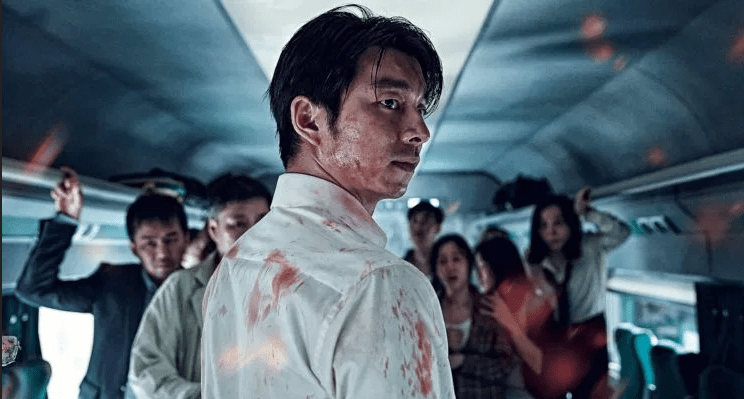
Train to Busan is a great fucking movie. End of story.
 Dawn Napier