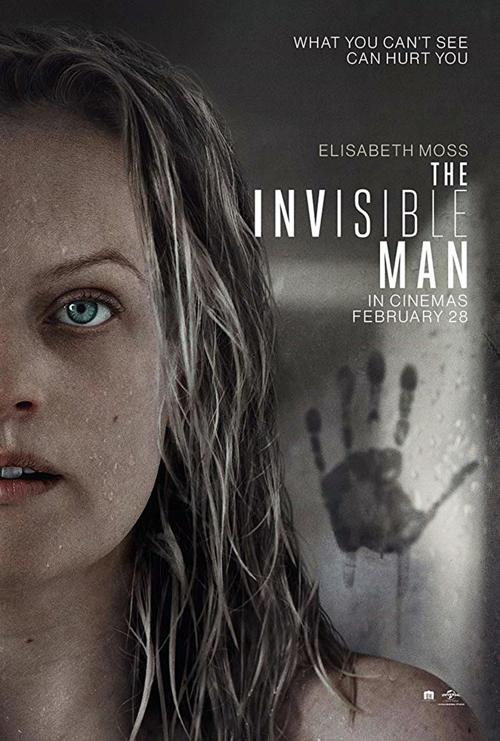
The Aftermath of Abuse: A Review of The Invisible Man

***Mild spoilers***

The kids and I watched The Invisible Man shortly before Halloween as part of an ongoing horror movie marathon. It’s not standard Halloween fare: there are no witches, no ghosts (not really), and no evil curses or spells. But the story is as familiar as a fairy tale, especially to women who have experienced domestic abuse.

Cecilia drugs her abusive boyfriend and flees in the middle of the night with the help of her sister Emily. She hides out in the home of a friend and his teenage daughter and is terrified to walk past the mailbox outside. A few weeks later, she gets word that he has killed himself and left his entire fortune to her. And that is when things get scary. Adrian isn’t dead, but Cecilia is the only one who knows. And she’s the only one who can see what he’s doing.

The first step that abusers take is isolating their victims from friends and family. When the victim is completely alone and feels like she has nobody to turn to, she’s less likely to try to escape. Financial dependence is another way. It’s hard to leave when one has no income and no way to get any. Finally, abusers’ favorite method of control is the oldest one in the book: motherhood. Getting the victim pregnant and keeping her bound up in the physical and financial trials of childbearing is a sure fire way to keep her from finding her feet.

Cecilia’s tormentor, Adrian, follows this recipe perfectly. He sends emails and commits acts of violence and sabotage that make everyone think that Cecilia is mentally unstable. His fortune has strings attached that she discovers when she finds out that he had tampered with her birth control. And that’s as much as I want to say with the movie being less than a year old.

I love a horror movie that makes me think, especially one with a lot of symbolism and theme. Good horror taps into societal fears and brings up those dark thoughts that keep us awake at night. Fears about cancer, about societal entropy, about the stranger in the night with a knife–those horror themes are as common as peanuts. Good, but nothing special. I’ve really enjoyed the last couple of years and the more complex stories that deal with fears that fall a bit more outside the mainstream. The Invisible Man is about domestic abuse, obviously, but it’s also about the scariest part: the aftermath.

Abuse doesn’t always leave bruises, and there isn’t a mark on Cecilia at the start of the movie. I thought for sure while watching that there would be an artful bruise on her cheek or possibly a healing shiner, but no–not a scratch. And as I watched sister Emily struggle to believe in Cecilia and believe in her fear, I wondered if the narrative would have gone differently if she HAD been marked up. It’s hard to believe in things we can’t see. The things Cecilia’s family and friends see are Adrian’s good looks, his money, and his death certificate. Cecilia begs them to look past all that to see the truth, but for the most part, they fail. It’s terrifying to not be believed.

I watched this with my sons and daughter and I’m so glad that I did. We talked about so much after it was over. We discussed gaslighting, the signs of emotional abuse, the desire for control, and we talked about trusting our instincts and trusting each other. The Invisible Man is an amazing movie, as smart as it is scary, and I recommend it to anyone.

Some Thoughts About ADHD and Other Neurodivergences

You don’t outgrow ADHD, but I think I understand why some people think you do.

(For the record, I don’t have a formal diagnosis of ADHD. But the coping mechanisms and tips and tricks recommended for ADHD patients to help them survive as functioning human beings all work on me, so that’s what I’m rolling with until I can afford a therapist.)

Life has gotten so much easier since I’ve been able to control my own schedule and set my own deadlines. I’m very lucky in that I was able to find a job suited to my temperament and energy level. It makes me wonder how I ever survived high school and early adulthood. I’m not being dragged out of bed and thrown onto a bus and being held to someone else’s schedule and someone else’s educational standards. I’m not being made to sit still and learn about math fractions when I need to stare out the window and twirl my hair. If I want to twirl my hair for three hours while thinking about sexy unicorns, then by God that’s how I’m spending my afternoon. And YES, in case you were wondering, my split ends are a hot mess.

And speaking of math, I actually enjoy it now that I have control over what and how I learn. I was a terrible math student in school, not out of any natural ineptitude but just sheer frustrated boredom. And math isn’t boring at all. I just wasn’t suited for the environment and the schedule being forced upon me. It wasn’t math I hated; it was the context. By the way if you’ve got Curiosity Stream (and you need to have Curiosity Stream), there’s a great documentary about algorithms that everyone should watch.

Because I’ve been inside my own brain for so long, I’ve gotten to know its quirks and workarounds. I can check my spoons and decide ahead of time, “Nope, not doing that today. Too peopley.” Or I’ll think about a writing project and go, “I’m not quite ready to start that yet, I have to zone out for *checks clock* twenty more minutes and then I’ll be ready for real world stuff.” I’m not lazy or procrastinating; it’s that I struggle with changing gears. I have to prepare myself for the next thing, and if I don’t have time to prepare my brain gets flustered and locks up. This was a problem when I had to exist in an environment that gave you about four minutes to race from one end of the building to the other and maybe even stop off for a textbook along the way.

Over the years I’ve come to suspect that a lot of neurodivergences are only disabilities in certain contexts. It’s not that a person with ADHD or autism can’t function; it’s that they can’t function in this specific environment under these particular stressors. And most of the time there’s nothing they can do about it. Everyone likes to talk about the land of the free, but we don’t have the freedom we think we do. Most of us can’t even afford to look for a better job; we have to keep the crappy one for the health insurance. If everyone could look for the work that suited them without having to worry about paying for health care, we could probably save a lot of money on health care. Depression, anxiety, and ulcers would all go WAY down. Something to think about, anyway.

Down the Well–a Stephen King Fanfic

The swing creaked as Abigail Bagley swung back and forth. The rusty chains bit into her hands, but she squeezed them tighter and tighter as she swung. The air was brisk and cool, indicating the onset of evening. Soon her mother would call her in for dinner and bed. Inside the lights would be bright, and she had her Scooby-Doo night light for when Mom shut the door. But Abigail liked it outside, where it was wide open and she could see all around. It helped her not to be afraid of the well.

Mom had picked this house to rent because of the well. They didn’t have a lot of money, and Mom said that having water that couldn’t get shut off would be a great thing. Abigail understood, and in fact she liked the taste of the well water much better than the water in the drinking fountains at school. But she didn’t like the well itself. It was dark and weird down there, and the water made sloshing noises even when nobody was using it.

She didn’t talk to her parents about the noises she heard, the noises that sometimes sounded like voices. Daddy was back in Boston, and it was hard to talk about stuff like this on the phone. Last time she’d tried, he’d started yelling about Mom letting her watch that weird movie with the well girl. But she had only watched a minute or two before Mom caught her and shut it off. When they’d been married, Abigail had always heard Dad tell Mom, “You’re overreacting. Calm down.” But it usually seemed like Dad was the one who should calm down. The yelling had finally gotten to be too much for everyone, and now Abigail and her Mom were renting a raggedy old house on the edge of Bumblefuck, Maine. Mom didn’t know that Abigail knew the word, but Mom had said it a bunch of times, and it sounded funny to Abigail. So she said it too, but only in her head.

Talking to Mom about scary stuff was out of the question. Mom had real world stuff to be scared of, and Abigail didn’t want to make her more scared. So she ignored the well as much as she could, and she stayed out here in the open, where she could keep an eye on it. Over here on the rusty swing set, she couldn’t hear the sloshing of the water. Sometimes the sloshing sounded like voices.

The air was cooler now, and a chilly breeze ruffled her hair. It felt nice. When Abigail thought too hard about scary stuff, sometimes it felt like her head was too hot, and it hurt. The cold air washed out the scary thoughts, and Abigail felt calmer. Soon she would go inside and eat, but not yet.

There was a sloshing, slapping noise from down inside the well. Abigail put her feet down and stopped the swing. For a minute or two all was silent except for the rustle of the wind in the trees. There were no cars driving by. They lived at the end of a long, dirt road, all by themselves.

There was another splash from inside the well. Abigail swallowed. Her throat felt thick and dry.

Then she heard a little girl’s voice. “Help!”

Abigail stood up before she had time to think. The voice was panicky, and her first instinct was to rush to the well and try to see who was down there. But before she’d taken a step Abigail caught herself. She had been out here for hours, watching the well. If anyone had fallen down there, she would have seen.

“You’re not real,” she said aloud, and she sat back down on the swing.

There was silence for a while, and Abigail thought it was over. Then she heard her father’s voice.

“God damn it, Abby! Why won’t you ever listen? Get over here and look at me when I’m talking to you, young lady!”

Abigail cringed. She knew it wasn’t real, but his voice cut into her heart as though he were standing right next to him. She scrunched down into the seat and tried to curl up and make herself small. It was what she had always done when Dad started yelling, and it usually helped.

“Don’t yell at her!” That was Mom’s voice. Abigail’s breath caught in her throat. “Don’t you dare yell at her, it is not her fault!”

Then she heard it: that horrible sound that had ended her parents’ marriage and torn their family in half. That flat, lifeless slap of Dad’s hand across Mom’s face.

Abigail jumped to her feet. “Don’t you dare!” she shrieked. “Don’t you touch her, you big mean bully!” Her heart pounded in her chest, and she felt like she might explode from the rage and fear that flooded her body.

Silence again. Abigail panted hard and tried to calm herself. She was halfway between the swing set and the well, though she did not remember moving at all.

Then she heard a low, horrible chuckle. And the sloshing sound from the well came again. Louder. There was something big and heavy in there.

“You’re a smart one,” whispered the voice from the well. It didn’t sound like Dad or Mom. It sounded low and chuckly, like some awful being telling a joke. “Took me a few tries to find your button. But here we are at last, and here I come.”

All the strength went out of Abigail’s legs, and she fell on the ground. She put her hands out and tried to scoot backwards, but the sloshing sound was getting louder. Now there was a clawing, dragging sound coming from the well. Something was climbing the brick walls, pulling itself out.

“Oh please no,” she whispered.

“Oh please yes,” the chuckling voice responded. The well cover shifted and opened a crack. A small grey hand emerged. Its fingernails were black and filthy. Then the voice changed back to the little girl from before. “It’s so cold down here, Abby. Don’t leave me alone. You’ll like it down here.”

“Oh no please,” Abigail said again. She scooted backwards on her butt, but she still couldn’t find her feet. The thing was coming out of the well, and she didn’t know how to stop it. Soon it would come get her, then it would come get Mommy. Mommy had watched the movie too. Seven days ago.

“You’ll like it down here. There are lots of kids to play with. Kids just like you, who won’t laugh at your old clothes or your Mom who doesn’t have a man. We have so much fun down here. We play, and we float. We all float down here.”

The hand was followed by an arm, then another arm. Then the horrible head, full of stringy black hair that dripped with well water. There were other things in the well girl’s hair. Things that squirmed.

“We… all… FLOAT!”

Abigail screamed. The dead girl lifted her head and grinned, and her mouth was full of thin, jagged teeth. Her face was white and smeared with what looked like white makeup and bright red blood. “We all float,” the dead girl whispered around her mouthful of teeth. “You’ll float too.”

The thing from the well crawled slowly, slowly towards her, and Abigail scooted backwards. She still couldn’t find her feet.

It was getting closer.

This felt like the bad dreams she sometimes had, when she tried to run but her arms and legs were weak and stiff and she couldn’t move. The thing crawled closer.

Then Abigail took a deep breath and screamed, “I didn’t watch the cursed video!”

The thing from the well hesitated. Abigail went on, “I only saw the part at the end where the dad died. My mom told me the rest. I never saw the part that kills you!”

The dead thing from the well went very still. It was almost as though someone had hit the pause button. Abigail scrambled to her feet and ran into the house, panting and sobbing.

Inside, Mom was talking on her phone. She set it down as soon as she saw Abigail come in. “Are you okay?” she asked. “What happened?”

Abigail threw herself into her mother’s arms. “I don’t like the well, Mom,” she whispered. Mom’s hair was warm and smelled nice. Abigail closed her eyes and breathed deeply. She could finally breathe.

“Sweetie, we’re not going to stay here anymore,” Mom said. “I just got done talking to the landlord. The house is way more broken than he said it was—that well is about the only thing that isn’t falling apart—and another kid disappeared last night. I’m done here. We’re done. Your dad says there’s a nice place not far from him and Kristen, and we’re going out there this weekend to check it out.”

Abigail gave a long, shuddering sigh. She felt like she might fall asleep standing up. “Good,” she murmured. “I hate it here.”

She disengaged from her mother and went to the back door to look out. A small, grey hand disappeared into the well, and the cover moved back into place. “You can’t get me,” she whispered.

Then she went into the bathroom to wash her hands for dinner.
The Future of Vampires: A Review of Daybreakers

Vampires are sexy.

Complain about Twilight all you want, but sexy is their thing. Every movie monster that has multiple successful iterations (and in some cases have been beaten to death, looking at you zombies) represents some society-wide fear and taps into it for the shivers. Vampires represent sexual fears, often the fear of rape or loss of control. You can see it most clearly in older iterations like Dracula, which is a very straightforward psycho-sexual analysis of the human condition. But the world is a little more complicated now than it was in Bram Stoker’s time, so the fears vampires represent are also more complicated, and in my opinion, more interesting.

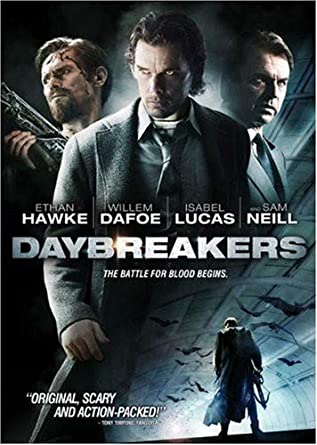
Daybreakers is a modern dystopian take on vampire mythology. Ten years into the future, a vampire infection has taken over most of humanity, and the straggling survivors are being hunted and farmed for blood. Edward Dalton works for a major corporation as a researcher trying to create a blood substitute that will feed the vampire population without destroying the humans. He never wanted to be a vampire and feels sorry for humans; his motivation is mostly altruistic. Over the course of the film he realizes two things: firstly, that the corporation he works for is anything but altruistic, and also the substitute isn’t necessary. There is a cure for vampirism, and Dalton becomes the mastermind behind perfecting it.

As vampire movies go, it’s more or less flawless. It hits all the important tropes: the vampires burn in sunlight, can’t see themselves in mirrors, and can go from dapper sex symbol to ravening bat-like beast in 0.2 seconds. Fans of traditional vampire lore will find little to complain about. The upper-class vampires dress as though they’re heading to a speakeasy: walking and speaking in a cultured way that completely ignores the disaster looming just out of sight. The starving vampires, called “subsiders,” are captured and bundled out of sight so as not to offend the privileged vampires’ delicate sensibilities. When there are too many subsiders to contain, they’re chained to trucks and dragged into the sunlight to be euthanized. Not TOO subtle of a message there.

The visual aesthetic is stunning. The film has two different looks; the world of the vampires is stark and low-lit, almost black and white. (Fans of Dark City will notice a family resemblance.) The world of the humans, on the other hand, is warm and golden, filled with the colors of an early summer morning. The “sunrise” feel of the human side is deliberate, I suspect, suggesting the dawn of a new era. The cast is flawless. Sam Neill is a human treasure, and Ethan Hawke plays the tortured sexy protagonist to a tee. Even Willem Dafoe is kind of hot in this one.

As far as symbolism goes, there’s a lot of unpack. Because it’s futuristic dystopian, you should expect a lot of commentary about society, and what makes this movie so much fun is the myriad of ways that it can be interpreted. What are the vampires, really? Are they one percenters? Are they the for-profit health care industry, feeding on the sick and driving their customer base into the grave with exorbitant prices? Healthcare is hardly the only social issue plagued with unsustainable practices. Daybreakers is so full of detail and subtlety that one could watch it over and over again and come up with a different answer each time.

This brings us back to my initial point: vampires are sexy. Even Dalton, the reluctant vampire who refuses to drink human blood, dresses as though he’s auditioning for a ZZ Top video and walks like he’s moving in slow motion even when he’s not. Vampires represent sexual fears–and sexual desires. That’s why my favorite hypothesis about the symbolism of the Daybreakers vampires is they represent the traditional concept of sex as a struggle for dominance.

In American society, our language and culture is steeped in the concept of sexual dominance. “Pussy whipped” is what we call a man who lets his lady make decisions for him. “Make them your bitch.” “Grow some balls.” “I got raped in the wallet.” Sex is seen as transactional, usually between unequal power dynamics. The “male” role is dominant; the “female” role is submissive. These are all outdated, archaic concepts that nevertheless many people cling to who fear change and fear the loss of social dominance. The Daybreakers vampires know that there is a blood shortage and that their way of life is unsustainable, but the majority don’t know that there’s an alternative. The few who do want to kill the alternative and drive it underground, because even if it meant a better life for them, it would remove their illusions of superiority. With all their beautiful homes and fancy cars that can seal out light to drive in the daytime, the vampires are clinging to an illusion that will destroy their entire species.

Sex does not have to be a power struggle, and making it one is unsustainable for relationships and personal happiness. Sex should be exchanged between equal individuals, with no assumptions of superiority or ownership. If a sexual exchange is monetary in nature, then that too should take place between equals, freely and with enthusiastic consent. If monogamy is the goal, then that too should be an understanding between equals, without suspicion or control entering into it.

Dalton approaches humans as one approaches an equal, not as a predator approaches prey. By doing so he opens the door to saving both himself and the rest of the dying population. Others can do the same, and they can be free and walk under the sun again.

Book Review: A Basketful of Heads

I was never a huge fan of traditional superhero comics when I was a kid, because I found the format frustrating. I wanted to finish the whole story in one sitting like I could with a book, and waiting for weeks just to read for half an hour drove me crazy.

I did like horror comics, though, because they were self-contained stories within a single issue. Tales from the Crypt, The Vault of Horror, and The Haunt of Fear are three titles I remember distinctly. They were gruesome and horrifying but oddly moral, like if Tom Savini wrote for The Twilight Zone. I loved them and analyzed them to death for clues to how I could use their lessons follow in the footsteps of my idol Stephen King, who I knew was also a childhood fan.

I’ve started reading comics more often lately, since I discovered graphic novels. Now I can read an entire volume of Harley Quinn’s adventures without having to wait for the next skimpy little issue to come out. So you can imagine my excitement when I found the complete volume of A Basketful of Heads at my local library.

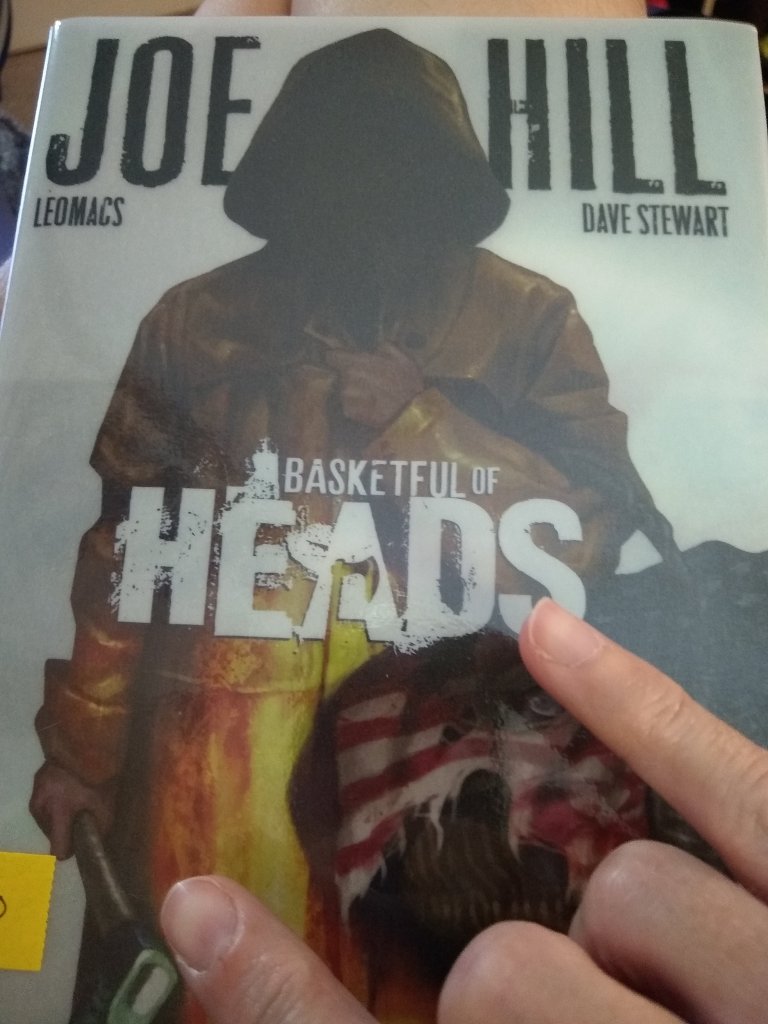
A Basketful of Heads, the graphic novel written by horror’s boy wonder Joe Hill and the first offering from his new DC imprint Hill House, reads a LOT like those long-ago horror comics. There’s blood, intrigue, and a sexy young woman named June who fears for her life from a gang of criminals. She becomes a target because of her connection to a young cop in training named Liam, but finds herself in possession of an unexpected ally in the form of a very old, very special Viking-era battle axe. It reminds me of an eighties-style slasher, but instead of one relentless killer and a collection of pretty girls, it’s one pretty girl working her way through a collection of relentless killers in her search to find and rescue the love of her life.

If you’re familiar with the work of Joe Hill, then you know that in his world (his inscape if you will), NOBODY is safe. There’s no guarantee justice will be served. Things are going to happen the way they’re meant to happen and if you don’t like it that’s too damn bad. (His novella “Loaded” had me breathing into a paper bag at the end.) And as comfortably traditional as the story felt as I was reading it, in the back of my mind I knew that poetic justice and a morally satisfying conclusion were not guaranteed. That knowledge added a little extra zest to my reading experience, and as a result I plowed through the entire volume in a matter of minutes. I’ll have to go back and read it again so I can enjoy the artwork a little more.

Speaking of the artwork, it’s pretty fucking great. The bulk of the story takes place during this godawful storm on an island, so there’s a pervasive feeling of wetness that permeates every page. You can almost feel the little trickle of water sliding down the back of your neck like when it’s raining really hard and your neck isn’t completely covered. The characters are well-drawn as people and not stereotypes and action figures to be pushed around on the page. Even the violent criminals are complex in their own way.

If you like Joe Hill, Stephen King, or traditional-style horror comics, you need to give A Basketful of Heads a try. It’s clever, entertaining, a little scary in places, and overall a good time.

This shit’s pretty metal.

The Children’s Bones

*CW for child death*

Once upon a time there was a witch, but her house of candy was not in the middle of a deep wood. The little house was in a neat little suburb, and the witch was a cosmetics saleswoman named Jessica Howell.

Jessica was not a witch by choice. She had not been born with evil dwelling in her like dark cancer. She wept every time a child was taken and devoured by the thing living beneath her house. She lived in fear of it. She hated it. She did not revel in death and blood. She was not the monster. She was just the gatekeeper.

She tried to ameliorate her sin by choosing unpleasant, bullying children, the sort that other children hated and feared. But at the bottom of her heart she knew that she was just as wicked as any witch who looked a child over for health and good fat. The children she took were dirty, they were ugly, they stomped on insects and pushed smaller children into the dirt—but they were children. By taking them, Jessica was taking away their ability to grow and change. They were dying in a state of sin, and it was her fault.

And their mothers. Jessica hid in her house and tried not to see the frantic faces of their mothers when they came looking for their children. The police roaming the neighborhood, flashlights swinging. There was never a funeral. The children’s bones were never found.

One child every three years. That was what it cost to keep the beast still and sleeping. Jessica was the witch who guarded it. And she was afraid. Even in the off-years she dreamed of it, of the dark and the claws and its dirty, grubbing teeth. And the smell of blood and the children’s bones.

One cold morning, Jessica awoke at dawn. She put on the coffee and looked out at the misty morning sun. It all looked so peaceful. She wrapped her pink bathrobe tightly around herself and stepped barefoot into the damp grass. The wet cold drove into her feet like knives.

Jessica crept round to the plywood door that covered up her crawl space. She sometimes thought about boarding it up more tightly, with proper wood and padlocks, but what good would that do? When the beast was sated, it slept. And when it was hungry, no power of heaven or earth would keep it in its hole.

Jessica leaned against the siding of the house and closed her eyes. Soon it would be time again. Time to find a child, someone mean and greedy, with neglectful parents who would not be missed right away. Someone easy to bribe with candy and promises.

“My cat is trapped in the crawl space,” she would say. “If you can get in there and bring him out, I’ll give you ten dollars and this whole bag of candy.” And his eyes would light up with avarice, and he would think nothing at all of crawling into the dark and the cold by himself. He might not even notice when Jessica closed the plywood door behind him.

“You old bastard,” Jessica whispered. “How long have you been here? Did you come to the house, or was the house built around you?”

Twenty four years Jessica had lived here. One child every three years. But how many before her? The house had stood for eighty years; had the monster been here all this time? So many questions.

Jessica had bought the house from an old woman who was dying of cancer. She’d never met the woman, a Mrs. Audrey Hillson; the closing had been attended by her grandson. “She’s been in a hospice these last few weeks,” Jim Hillson had explained. “The cancer’s making her lose her mind a little, and she needs to be watched.”

“Was it the cancer that broke her mind, or was it you?” Jessica whispered. “If I have to do this for another fifty years, I’ll go crazy myself.”

A low growl rumbled from behind the plywood door. The beast was stirring. Jessica felt the old anxiety, the old hunger building. She could sense the monster’s need. This summer, no later, it needed to be fed.

Jessica sometimes thought about burning the house. Fill the crawl space with kerosene, light a match, run like hell, burn baby burn. Let the beast have a barbecue this year.

But first she’d have to get close enough. She’d have to open the door and enter the crawlspace to pour or spray the fuel. The crawl was cold and damp, even in dry summer. It would never burn enough to even hurt the monster without accelerant.

And that always brought her to the second solution. Just go inside. Let the beast take her. It would hurt, but only for a minute. And there would be no more dreams. She could sleep, it would be so quiet and peaceful.

She tested her resolve now, putting one hand against the damp plywood. The beast’s growl deepened. She pushed a little, and it snarled. A deep, horrible sound that Jessica felt in her guts and in her soul. Jessica withdrew. She was cowardly and wicked; she couldn’t do it. Not this year. Not yet.

Jessica went into the house. Her coffee was almost ready. She could smell it as she entered the house.

It covered up the other smell. The smell of death, and the children’s bones.

***

Officer Jamieson nodded to his partner. “Are you ready?” he asked.

Basovsky shook his head. “No,” he said. “I still can’t believe it.”

Jamieson walked out to his patrol car, and Basovsky followed. “Female serial killers are unusual, but not nonexistent,” he said. “You took all the same classes I did, and you know she fits the profile.”

“What did the Smith broad see her doing, exactly?”

“Keirsten Smith was out walking her dog last night and saw a woman resembling Jessica Howell climbing out of her crawl space covered in blood, and she had what looked like a baseball cap in one hand. Smith took off and ran home before Howell saw her. She’s lucky to be alive, is what I think. That crazy bitch might have killed her, just like she probably killed the Adams kid.”

“And she’s sure it wasn’t an animal or something?”

“Dude, what kind of animal looks like a skinny woman with glasses and a tank top?”

“I sound like someone’s mother, don’t I?” Basovsky shook his head. “Such a nice, quiet person. House full of cats. So kind to dogs, and good with children.”

“It’s always the nice quiet ones. That’s how they get away with it for so long.”

How to Kill the Kid: A Review of Hereditary

In a story.

Please don’t call the cops.

I watched Hereditary over the weekend. (CONTAINS SPOILERS!!!) Or at least I tried to. I turned it off about an hour in. I like tales of the supernatural, but Hereditary was too dull, too slow, and too sad. I read the rest of the plot online to discover that it does pick up near the end, but by then I’d already returned the DVD.

The experience got me to thinking about horror movies and the whole debate on the hows and whys of killing the innocent in the course of your storytelling. “Should I kill the kid?” is a dumb question. Obviously there will be times when it’s unavoidable. It’s a HORROR story. It’s going to horrify you. It’s right there in the name. So you can’t let a reader think that the cute baby is safe just because he’s cute. For that you want fantasy, or possibly romantic comedy.

But there’s a trick to doing it effectively. The following is the opinion of the author and subject to scrutiny and critique. Good horror is highly subjective, but it’s my strong opinion that the best horror has heart to it as well as blood and guts. It’s not about sparing the viewer’s feelings as it is manipulating them to maximum effect. If you’re going to make them cry, you’d better make them believe it was worth it.

To this end I want to compare Hereditary to one of my all-time favorite stories: Pet Sematary by Stephen King. For this purpose you can assume I’m talking about the book or the original movie with Fred Gwynne and Denise Crosby. The storylines are almost identical, and Gage’s death is the same in both. (And the less said about the remake, the better.)

(You didn’t need a spoiler alert for this, did you? The movie is 30 years old. You’ve either seen it by now or you don’t want to.)

In Hereditary, a teenage boy is forced to drag his younger sister with him to a party that she doesn’t even want to attend. She eats a piece of cake there and has an anaphylactic reaction. (We are told near the beginning that she has a nut allergy. We are also told that her family is EXTREMELY careless about it and keeps leaving her Epi-Pen at home.) The boy is high off his ass, but he wakes up enough to panic and throw her into the car. While he’s driving like a crazy person, she opens the window and hangs her head out to try to get more air. He skids out on the road, grazes a telephone pole, and it takes her head clean off.

Then he goes home and goes to bed, leaving his mother to discover the bloodied corpse in the morning.

Then you get to see a close-up of the severed head, lying in the road covered in ants. Fun!

I had the kind of physical reaction that I expect the filmmakers wanted me to have. I was worried about the kid, although not too worried because I thought she’d be the central figure–the Regan, if you will–and it wasn’t her time yet. The moment of decapitation shocked me out of a half-doze, and it took me a few minutes to catch my breath. So in that respect, it was a success. But then I turned the movie off half an hour later. There was too much yelling, and I was getting a headache.

Graphic death does not inspire fear if it does not move the viewer emotionally. There needs to be empathy. And most importantly, the death has to follow the rules of the world it happens in. I found out later that this was actually a demonic possession movie with some pretty serious chops in the last ten minutes, but at the time of Charlie’s death all I had were some vague flickers of ghostly activity that appeared to mean nothing.

Hereditary takes place in what is believed to be the real world, but there is nothing realistic about Charlie’s death. She is allowed to go to a party without her Epi-Pen. She’s given a piece of cake and eats it without asking if it has nuts. Her brother tries to do the right thing–finally–but just happens to hit that skid at just the right moment to graze that pole in just the right way while Charlie happens to be hanging her head out the window. I realize that Final Destination managed to make a good living at this sort of scenario, but that franchise has an entirely different atmosphere.

By contrast, let’s examine Stephen King’s masterpiece, Pet Sematary. Say what you will about the special effects, but the pathos is deeper and truer than in most modern films. A precocious two year old gets hit by a truck while chasing after a kite. That’s it, that’s the whole scene. It could have happened to anyone. The news is full of similar stories, and in fact the book was inspired by a very similar incident involving King’s youngest son, Owen. (Thankfully the real deal had a better outcome. Owen King grew up to be a gift to the writing world.)

Almost nothing of the accident is shown, although it is described secondhand in some detail in the book. All you see in the movie is a slow-motion tumble of a sneaker filled with blood. That fucks me up so much worse than that goddam severed head. The head just made me angry. Not because Charlie died, but because I felt manipulated. It felt like when I was a little kid and the boys on the playground would shove a dead bug in my face to try to make me scream. The only foreshadowing was the father finding out that the family matriarch’s grave had been vandalized and desecrated. If he had come out and told someone that the old lady’s head was taken off, then I could have shifted my mindset accordingly and it wouldn’t have seemed like a pointless punch in the face. I suppose for some people the decapitated pigeon would have done the trick, but the kid was so weird in general I honestly didn’t give it a lot of thought.

This might seem like a dumb nitpick, but I have friends who have children with life-threatening allergies, and they never go anywhere without that Epi-Pen. The child’s first complete sentence is invariably, “Does this have nuts?” I couldn’t really get into the pathos of Charlie or her parents when I was shaking my head and saying, “You’re really going to let her eat that chocolate bar, huh? All chocolate has traces of nuts. Oh look, now she’s eating chocolate cake. Can’t imagine what’s going to happen next. CHARLIE WHAT IS WRONG WITH YOUR PARENTS???”

After reading the synopsis of the rest of the movie on Wikipedia, I found out that the decapitation was a necessary plot point. Apparently everyone in that family gets their heads cut off as a sacrifice to some demon. If there had been more supernatural occurrences from the beginning, more foreshadowing to indicate that this was a possession movie, then Charlie’s death would have seemed less outlandish. But as I said, the impression is given that this story is taking place in the real world, and there aren’t enough demonic manifestations to either suspend disbelief or maintain my interest. It’s funny to say that the presence of the supernatural would have made the scene MORE believable, but it would have at least provided a rationale for the bizarre series of accidents that lead to Charlie’s death.

My takeaways from this experience were twofold: make your reader care enough or interested enough to keep them engaged, and keep. it. simple. If you have to create a weird unbelievable scenario in which to kill someone off, be johnny-on-the-spot with an explanation. If you wait until the end, you’ve waited too long.

Agree? Disagree? Did you see Hereditary? What did you think of it?

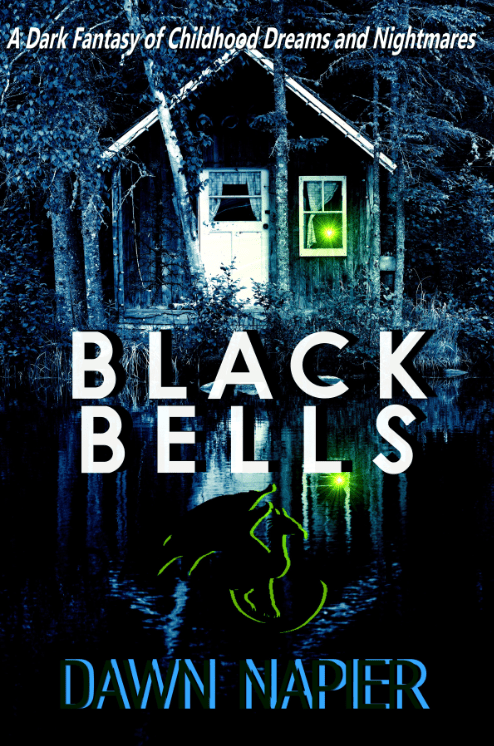
Black Bells: Megan Falls Down the Rabbit Hole

An hour later, Megan stared at a blank screen and wept silently.

She couldn’t do it. She’d lost the knack. She’d tried over and over again to conjure Jack Benimble in her mind and make him do what she wanted, but she’d failed. Every sentence she’d written was stiff, clumsy, and fake. It felt gross to her, like mental necrophilia.

God, what happened to me? How did I turn out this way, so dull and fake?

Jack was gone forever, and so was her daughter. Megan was powerless. She had to face facts: she wasn’t eight years old anymore, hiding in her closet with a sketch pad and a flashlight.

Wait a minute. She stopped herself. Maybe that was what she was doing wrong.

Megan shut down the computer. When she’d been eight, personal computers were still years into the future. Her family hadn’t even owned one until she was sixteen, and she’d been forbidden to touch it without direct supervision. Of course she wasn’t going to get back down the rabbit hole with this sleek, modern machine.

Megan had no sketch paper or printing paper, but she did have an enormous stack of ditto sheets shoved into the drawer beneath the computer—school work that the girls had brought home. Most of the sheets were one-sided: a terrible waste of paper in Megan’s opinion, but a blessing this time. She riffled through the stack and in two minutes had two dozen sheets of drawing paper.

The girls’ art supplies were in a drawer in Jenna’s bedroom. When Megan went back there, Jenna had all the farm animals standing in a circle around the barn. It looked like a bizarre druidic ritual. Megan shivered a little. “What are they doing?” she asked her daughter.

“Watching.”

“Watching for what?”

“Watching for Professor Chicken to come tell them what to do.”

“I see.” Megan wondered if this was a good opening to try and get more information out of her, but then she shook her head. She was too damn tired, and anyway, it felt like she’d gotten as much out of Jenna as she was ever going to. The paper in her hands was already starting to talk to her, and she felt that familiar itch on the back of her neck, right at the base of her skull. She wanted to write; she felt the need in a way she hadn’t when she was staring at the blank, soulless screen of the computer.

She found a box of the basic ten colors that looked fairly intact. That’s all she would need. She had always stuck to bold, simple colors when she was telling her stories to Debbie, and she needed to re-create that same energy now.

Back to her bedroom, and straight to the walk-in closet she and Brian shared. For once, she was grateful for Brian’s childlike addiction to clutter. The dropped clothes and scattered CD-ROM disks made it feel more cozy, more like a child’s closet. But it was still missing something.

Of course. Megan pulled the rosy-pink comforter off the bed and dragged it into the closet. She kicked, pushed, and pummeled the comforter into something resembling a squirrel’s nest. Then she gathered up her paper and crayons, found an old coffee table book she could use as a lap desk, and settled in.

There was nothing soulless or blank about the paper in her hands. Rather, it was pure potential, like the sort of quantum universes that astrophysicists talked about. There might be an elephant, a planet, or an undiscovered species here. It could be anything at all.

Start with Jack, Megan thought.

She drew Jack Benimble as he had been in the coffee shop: bright motley, with black bells. Why the black bells? Was that some sort of clue, a bit of symbolism, or nothing at all?

Never mind. Just draw. Megan was amused to observe that her drawing skills with crayons hadn’t improved much since she was eight. They felt stumpy and thick in her hands, and she resisted the urge to clutch them in her fist like a toddler. She felt flustered and clumsy, but that was all right. Getting back into a childlike mindset would be easier than she thought.

On the next page, she wrote in ragged longhand, “Once upon a time there lived two girls and their friend Jack. Jack made magic happen, and he made them feel good when things at home were sad and scarey.”

“Scarey.” Megan started to correct the typo, but she changed her mind. That was the sort of mistake a child would make.

The crayon felt warm under her hand as she continued. “One little girl was tall and pretty, and the other little girl was shorter and smarter. They loved each other very much, and they loved their good friend Jack.”

Oh, she felt it now; how could she have forgotten this feeling? The warmth spreading through her brain, like a river of molten gold. It felt like dreaming, but it was alive and conscious and real. When was the last time she’d written anything? Before or after she’d gotten custody of her girls?

Megan was suddenly angry with herself for neglecting this wonderful gift for so long. She drew the two little girls: one tall and gawky like herself, the other short and chubby like Debbie. They had identical brown hair and hazel-green eyes. Around them she drew brown shapes that could be dogs or bears. She decided that they were dogs.

“One day the girls asked Jack to take them to the Island of Dogs, where all dogs could run free and not be on leashes or get put to sleep because nobody wanted them. So he jingled his magic bells, and they were taken away through the sky to a beautiful island full of wonderful dogs. The dogs were happy to see them, and they licked their faces with pink tongues.”

The crayon was hot in her hand, but Megan’s hand clamped down and wouldn’t let go. It hurt, but in a good way. She went on. “But then one day an evil wizard came to the islands, and all the dogs ran away to hide. The evil wizard laughed and laughed…”

The crayon in her hand was so hot that Megan thought it might melt. But it stayed strong, and the words poured out of her hand.

It’s back! she exulted. I can feel it! I remember now, I remember how to do this!

Why did I ever stop?

Along with the pleasure, though, Megan felt a trace of fear. Of what she didn’t know. She felt apprehensive, as though something had happened or might happen, or maybe she just thought it could happen—Megan didn’t know this either. But she ignored the fear in favor of the delight she took in her story. One dog was grey and had a pointed snout and blue eyes. Megan shivered when she looked at the blue blobs of its eyes. Faintly, she heard a snarl. That wasn’t a friendly dog, she felt. That was not a dog who would run from the evil wizard.

There was a black smudge in the middle of the paper. Megan frowned and touched it, and the smudge expanded to cover the entire paper. It felt cold. She touched it again, and her hand disappeared. Megan yelped and pulled her hand back, but the world was tilting, tipping her forward, and Megan fell through the black smudge that was no smudge at all, but a hole, and Megan fell. She fell through the hole in the paper.

You Really Should At Least TRY Not to Be a Jerk

You know what, I get really annoyed when someone posts, “Would it be insensitive for me to write XYZ?” and some schmoe says, “Write whatever you want, it’s your story. Someone will be offended no matter what you write.”

I mean, of course that’s true, but it’s not HELPFUL. When you respond with that or some variant of “Someone’s going to be offended no matter what” you’re just announcing that you don’t understand racism, ableism, microaggressions, or any of a million other things that most people think about when they, you know, care about other people.

(Honestly, the people I know who say “Someone will be offended no matter what” are always the people who don’t give a shit about anyone else’s feelings and say some of the most godawful offensive stuff and then get mad when I don’t laugh at their stupid jokes. THEY think someone will be offended no matter what because they can’t go ten minutes without being rude. It doesn’t mean there’s something wrong with literally every person they know.)

It’s true that you can’t please everyone. And it’s true that if you write, someone somewhere will probably be offended by what you wrote. But is that a reason to not care? Sometimes something that you want to write is really truly racist and wrong, just full-stop omg NO. And maybe you genuinely don’t know and don’t intend any harm. Does it hurt to ask? When do you want to find this out: when the idea is still in the planning stages, or after it’s been through half a dozen (white) editors and hit the shelves to be seen by thousands of people?

Your story is up to you, and everything it says comes from you. So if you’re fine with the message your story sends (and yes there IS a message, there is ALWAYS a message, and if there isn’t your readers will find one), and you don’t need advice from anyone because you’ve got full confidence in what you’re saying and how you say it… Have at it. Good luck and God speed. I won’t tell you that you need to ask for advice if you genuinely don’t think you need it. It’s all you. But if someone does ask for advice, don’t tell them that it’s stupid to do so. They’re trying to be a good person. Why do you want to shit on that? If you don’t know what’s offensive, then saying nothing is always an option.

Let me say that again: SAYING NOTHING IS ALWAYS AN OPTION. It’s even in the Constitution.

Go, and be excellent to each other.