This Week’s Movie Picks: Starry Eyes, The Mimic, and Other Movies with Meaning

I’ve been on a movie kick this week. I finished my latest novel last week (Medusa Reborn, stay tuned), and my new one isn’t quite ready to be born yet. I’ve put in a few words here and there, but the vibe just isn’t there yet. So I’m watching movies.

A Facebook friend once commented that “Edgy for the sake of being edgy” is the dumbest criticism imaginable, because edgy is its own reward. “It’s like complaining about a comedian by saying he’s just being funny for the sake of funny.” And he’s got a point; funny is funny, and anything that makes us laugh is a good thing. But funny can be even funnier when there’s a point behind it. Compare Andrew Dice Clay to George Carlin and tell me I’m wrong.

So I really dig horror movies that have a point to them. I LOVE deconstructing monsters and figuring out what the writers were trying to say about society. There’s almost always hidden subtext even if the writers didn’t mean it intentionally. It’s the nature of horror. What scares people as a whole? What is going to make bank? The easiest way to answer those questions is to tap into societal anxieties and go from there.

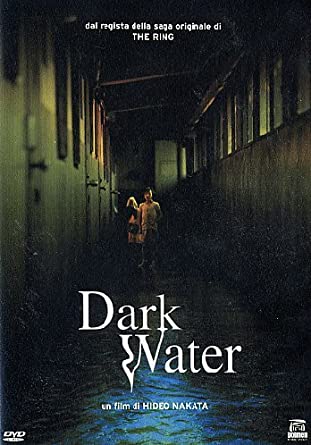
The first movie on the docket is Dark Water, the original Japanese version. I watched the American version with Jennifer O’Connell years ago, and it was okay. But, as usual, the original was freaking fantastic. A constant theme is mothers abandoning or forgetting their daughters, and small children feeling left behind. One particular abandoned child feels especially hostile about this, and another mother is forced to make a dreadful choice to protect her own child. The ending scene wraps it all up beautifully, and the survivors come away feeling protected instead of abandoned.

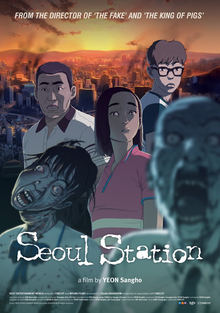
Then came Seoul Station, the animated prequel to Train to Busan. The theme here dealt with the “undesirable” element of society: namely sex workers and the homeless. If people just gave a shit about this one homeless guy who just happened to be bleeding from his neck and collapsed in an alley, man none of this would have happened. There’s a fun twist near the end of this one, and the final kill is deeply satisfying.

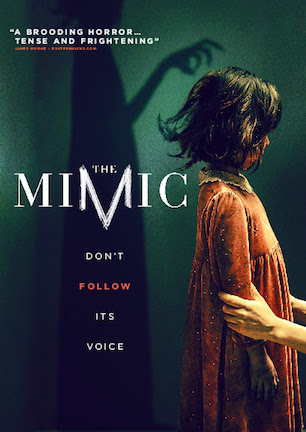
I didn’t intend to spend most of the week watching Asian horror films, but that’s just how it turned out. On the advice of an AMAZING podcast called Girl, That’s Scary, I watched The Mimic: a Korean film based on a folk legend about a monster called the Jangsan tiger that can mimic human voices and sounds. This one comes back to the fears and anxieties of parenthood; the main character is a woman whose child disappeared years before, and she still blames herself and yearns for his return. The father believes his son to be dead and wants the family to move on, and this conflict manifests in physical form in the final moments of the film.

And finally, an American selection: Starry Eyes. Jesus Christ am I glad I never wanted to be an actor. An ambitious young woman is busting her ass to Make It, and she demonstrates that she will do anything for her big break. Death, murder, semi-consensual sex, it’s all good in Hollywood. It doesn’t QUITE punch you in the face with the symbolism, but it’s more than a light slap. Given the movie poster, I was expecting more eye-gouging, but there’s still enough gross shit to satisfy the average body horror fan. I’m hoping this one gets a sequel.

It’s been a fun week. Okay, I’ve been sitting on my ass watching movies instead of starting a new book, but recharging the batteries is important. It’s fun to sit back and pick movies apart and figure out what everything means and whether it was intended. I still get a kick out of J.R.R. Tolkien insisting that there is no World War Two symbolism in Lord of the Rings, when anyone who’s taken half an English class knows that Sauron is basically Magic Hitler. And for the record, I believe him. Not all symbolism is intentional. Sometimes I don’t realize what I’m saying in a story until the second or third rewrite. And sometimes I’m not saying anything except, “Hey, wouldn’t werewolves in space be NEAT?”

All of these movies can be found on Shudder. If you don’t have a subscription, what on earth are you doing with your life?

Wall of Wasps

The wall of wasps stretched as high as the sky, and as far as the ends of the earth.  It was a buzzing, humming, moving world of wasps, a writhing surface of wasps, their black and yellow bodies dancing their strange insect dances, their stingers alive to the possibility of human intrusion.

Taryn hid in a huge old oak tree and watched the wall from a safe distance away.  Even from here, he could hear their buzzing.  It was a distant, humming song that rose and fell with the wind.

He leaned his back against the trunk of the tree and let his legs dangle on either side.  Papa would give him a good whipping when he found out Taryn had run off again, and he would beat him even harder when he found out Taryn had been to the wall.  He needed to savor these moments of freedom; tomorrow he would likely be too sore to climb trees.

Taryn heard the clop-clop of hooves, and he tensed.  Was Papa coming to find him already?  But no—that wasn’t Papa’s horse.  Big Grey was fat and slow, and this horse sounded brisk and lively.  This was a stranger.

Taryn moved farther out on his branch and peered through the leaves.  The wall of wasps hummed louder now; did they sense the approach of fresh meat?  Taryn shuddered.  He hoped the stranger knew not to get too close.

He saw the horse now, a slender, high-necked creature painted black and white.  Its rider was a burly young man with a sword on his back.  Taryn shook his head.  An adventurer, one who had heard the tales and had come to be tested.

Taryn knew the legends; everyone in Longwall had heard them.  The wall of wasps was a test put there by the gods.  One pure of heart and strong of sword could pass the wall safely, and beyond it lay a golden city of wonders and magic.  Taryn’s Papa had scoffed when Taryn’s sister Mija had last brought it up.

“Every country in the Many Kingdoms has a fairy tale like that one,” he said.  “Sometimes it’s a wicked forest, or a sword buried in a stone, or a witch’s castle.  All you have to be is pure of heart, and the world will be yours.  Just tales meant to comfort and encourage the poor souls who don’t know how to better their lot.  Put it out of your mind, poppet.”

“Then why are the wasps there?” Mija had asked.  She was only eight and didn’t like to hear tiresome truths.

“Why do insects do anything,” Papa said.  “I might care if they were a useful sort, like bees.  But if you can’t put this foolishness out of your head, at least save it for the dolls.  And stay away from that wall no matter how pure of heart you think you are.”

But here was a man who had not put it out of his head either, Taryn thought.  He was a muscular sort, probably a farm hand or smith’s apprentice.  He dismounted the painted horse with ease and left it loose to graze near Taryn’s tree.  Taryn liked him for that.  He might throw his life away on a dream, but he would not risk a fine horse.

The man approached the wall.  It writhed like a twister-cloud as the man drew closer, and Taryn’s heart galloped with fear.  There were so many wasps, so many of them, and they could all sting over and over again.  The stranger probably thought he could retreat again if the wall did not open.  Taryn knew that the wasps would not allow it.

He took a step closer, paused, then took another.  The wasps buzzed furiously, some of them leaving the mass to circle the stranger’s head.  That, Taryn knew, was all the warning he was going to get.

Taryn lay on his stomach along the length of the tree branch.  All his attention was on the strange man who was taking his last brave steps toward the wall of wasps.  Taryn studied the man’s brown shirt and breeches, absorbing every detail.  Someone back in Longwall might be looking for him.

The man was a solid silhouette against the writhing, buzzing backdrop of wasps.  He took one final step and stopped.  He turned his head to the side, and Taryn saw his profile—heavy black mustache, beaklike nose.  Was he trying to turn back?  Taryn would never know.

The wasps’ buzzing got louder and higher until it resembled a scream.  Then the wall moved, and a stinging, furious brown cloud swept over the man and engulfed him.  The man’s scream joined that of the wasps in an unholy chorus.

His scream became a choking cry, and Taryn cried out himself in horror.  All too well he could imagine the wasps swarming over the man’s body, covering his eyes and face and filling his mouth with stinging death.

Taryn scrambled out of the tree and dropped to the ground.  The shock of impact drove up through his feet and rattled his knees, but Taryn barely felt it.  He took off running for home, convinced that the wasps were coming for him, that they had tasted human flesh and wanted more.  The wall of wasps was moving.

Taryn flew over the ground, barely feeling the effort of his full-out, panicky run.  He would go to Papa and beg for the beating, beg to feel the switch against his flesh, and he would thank the gods for every stripe.  Anything to drive that stinging, horrible sight out of his mind.  The horse lifted its head as Taryn ran past, then returned to its grazing.  There was plenty to eat here, and the horse was in no hurry to move.

Behind him, the swarm of wasps subsided.  The wall smoothed out and returned to its previous mild, gentle buzz.  There was no sign of the stranger.

His Wife’s Garden

Arthur dug up another weed with his trowel and shook the dirt loose. “Gotcha, little bastard,” he said with a toothy grin. His voice was raspy from years of smoking. No cancer, though. Audrey had told him over and over that smoking would give him cancer, and give it to her too. Wrong on both counts, he thought with sunny satisfaction. Audrey was dead now, but not from cancer. Finally she’d been wrong about something.

He adjusted his sun hat and took a deep breath of the warm, earth-scented air. Audrey’s garden was a masterpiece, no question. He’d planted it after her death, sort of in her memory. It was a beauty. The tomatoes were beginning to ripen, and the flower bed on the other side was a rainbow of sweet-scented blossoms.

Of course it was easy to create such beauty when he had so much time on his hands. Audrey was gone, and the kids never came by anymore. Chad hadn’t brought the new baby over once. Arthur had to go on the computer to see what his grandbaby looked like. That was the modern world for you.

“We did the best we could Audrey,” he said as he pulled more weeds, “but the world is just going to hell. I knew it as soon as that—fellow—got in the White House. The White House. I still can’t believe it.”

Next to him was a mason jar half-filled with vinegar. He took the lid off now and resumed digging around his tomato plants. As he dug he picked out bugs and dropped them into the jar. They curled up and died instantly. They didn’t suffer. Neither had Audrey.

“I do miss Chad, though,” he said reflectively. “I miss how he was before he married that woman. He was always such a good boy. Too good for her, and she knows it. That’s why she’s trying to turn him bad.”

He picked up an earthworm and dropped it into the vinegar. Earthworms were harmless to his tomatoes, but he liked to watch them writhe. Nasty little grubby things, they got what they deserved.

“I still love you, Audrey,” he said. His voice was thick with unshed tears. He had never cried for his wife and never intended to. “In spite of everything, you were the best wife you knew how to be. You never let that woman talk to you about that feminist bullshit she used on Chad. You were the best.”

There was a sprig of grass poking out of the soil next to a bleeding heart bush. He pinched it and pulled it out. No more weed. It was so satisfying to work out here. Immediate, visible results. Not so much like the real world. He picked a ladybug off a leaf and dropped it into the vinegar.

He glanced back at the row of tomatoes. There was something crawling on one of them.

“Ugh!” It was a slug. A big fat yellow one. He recoiled, but then he moved closer. There was a bunch of them, all over the tomatoes. They were like slimy little wads of snot, and they were covering the plants that he’d planted in his wife’s memory. This was his wife’s garden. The little bastards.

“I hate slugs,” he said aloud. “And they’re all over your tomatoes. Bastards.”

There had been a lot of slugs out here when he’d first planted the garden. Right after Audrey had died, but before the police started showing up with their questions. Something in the soil had attracted slugs, worms, and flies too. He’d worried that the bugs would draw attention to the garden, when it was still so new and ugly, but nobody had seemed to notice. Not even the police, though they had been out here poking around several times. And by the end of the summer, the tomatoes were growing nicely and the insects had calmed down. Everything had gone back to normal, except that Chad never came around anymore. Arthur’s daughter Denise lived on the other side of the country and claimed that he’d ruined her life, so he never expected anything from her anymore. Uppity feminist.

Arthur glared at the fat yellow slugs as though they were responsible for his family’s screwups. He hated them. Damn the goddam slugs, he’d make them suffer like he couldn’t do to the assholes in his life.

He picked up the vinegar jar and brought it close to the tomato plants. Could slugs smell? He hoped so. He wanted them to smell their impending death.

Christ, that sounded melodramatic. He was in one of those moods today. Spending the day in Audrey’s garden did that to him every time.

Arthur pinched a fat, slimy slug and pulled it off the tomato leaf. It pulled loose with a faint pop and left a string of clear slime in its wake. “Fuck you, you little bastard,” Arthur whispered, and he dropped it into the jar of acidic death.

Or he tried to. Somehow the slug was stuck to his fingers. He flicked it with his thumb, but the slug stuck to his thumb.

Something wet touched his other hand. He looked down to see another slug, this one easily two inches long, sliming over his fingers.

“Ew!” he shook both hands so hard the bones popped, but both slugs held on like glue. And they kept on sliding. Cold, slimy trails oozed up past his wrists.

He grabbed the slug on his left forearm and threw it as hard as he could. It stuck fast to his fingertips. Again he shook his hand to flick it away, and this time it popped off like a grape. Arthur sighed with relief and opened his mouth to curse the slugs again. But instead he screamed.

The slug had landed on his lower lip, and now it was sliding into his mouth.

The vile slime tasted like batteries, like the medicine his mother had once put on a canker sore. He worked his tongue, trying to spit it out, but the damn thing wouldn’t budge. It sat there, fat and cold and foul, like a wad of snot he couldn’t hock up.

He started to reach for it, but he stopped when he saw that both of his hands were completely covered in slugs. Their little feelers waved at him. He gasped, and the slug shifted in his mouth.

Fine, he thought viciously. Don’t want to come out? Then soak in a different acid bath!

Arthur steeled his nerves, took a deep breath, and swallowed just as hard as he could.

The slug slid down his throat in a foul, slimy mass.

Then it stopped.

Arthur coughed, but it still didn’t move. Just sat there, like a disgusting wet lump.

Then it began to swell.

His throat was filled, and it continued to swell. His breath rasped harshly, and still it swelled. Then his breath wheezed to a standstill.

Desperately he shoved both slug-covered hands into his mouth, poking and jabbing for purchase. The swollen slug didn’t move, but half a dozen more joined their brother.

Arthur’s mouth was full of slugs, and all of them were swelling like slimy balloons. They covered his face. They filled his throat, his nostrils. They covered his eyes.

Arthur never managed a final scream.

As the slugs fed on his glassy, unseeing eyes, a trickle of fluid flowed from each eye. Ants came out of the ground to feast and gather the protein-rich ocular fluid.

At last Arthur was crying for his wife.

Storyland Chronicles: Henry and Gina

Pickle and Mister Man circled Jessica’s feet and yowled. Pickle’s voice was as old and creaky as the rest of her, but the young and vigorous Mister Man was able to pick up the slack. Pickle was a raggedy grey tabby with half a tail—Jessica was uncertain if she’d been born that way or if it had been lost to a dog or something—and Mister Man was a young and vigorous black tom. His voice drilled relentlessly into Jessica’s ears as she shuffled sleepily into the kitchen.

“I know, I know,” she muttered. “Hold your dang horses.”

The cats saw her open the refrigerator and cried even louder, racing around each other like hamsters. The power was off in this part of town, had been off since the Return, but the box was still a handy place to store food. It kept the rats out, and it contained the smell when the meat inevitably started to turn.

Jessica sniffed at the bowl of meat and nodded. It was a little strong but still fit to eat. Pickle and Mister Man agreed heartily, and their yowls increased in volume and pitch until they were cut off as with a knife when Jess plopped the last of the meat into their bowl. The cats dug in frantically, acting as though they hadn’t eaten in days.

“Greedy things,” Jess said fondly. “You just ate last night for crying out loud.”

There was no electricity in the apartment, but Jessica’s grandson had found and rigged up an old-fashioned wood stove shortly after the world went to hell. Jess missed Nick so badly. Not so much his parents, those uppity brats who thought Jess wasn’t fit to babysit her own grandson. How Jessica had come to hate them, especially the bitch wife. Nick was a good boy; he knew that Grandma loved him best, even though his parents had tried to poison him against her. But Nick was gone now, and Jessica missed him every day.

Nick’s disappearance was not a memory Jessica cared to dwell on, so she concentrated on brewing a good, strong cup of tea on the wood stove. After this and her customary bowl of bran cereal, she would see about acquiring more meat scraps for Pickle and Mister Man. Jess sat at her lonely little table and munched the dry cereal, washing it down with sips of hot, sweet tea. She missed milk. She liked milk in her tea as well as in her cereal. The cats tore at the scraps in their bowl and growled at each other around jaws full of raw, bloody meat. Jess ignored them. They were always like this at breakfast time.

The sun was shining outside, and the sky was a clear springtime blue. Jess opened the curtains and breathed deeply, as though she could inhale the sun’s energy. It was going to be a beautiful day. That was good. The hunting was always easier when the weather was fair and fine like this.

But first she had to go about butchering the meat she’d already caught. Jess went to the hall closet and put on a pair of waders, a heavy rubber apron, and long rubber gloves. She pulled her favorite machete out of the umbrella stand next to the front door and headed down to the basement storage room.

Her entire building was deserted. All of Jess’s neighbors were either dead or they fled. This was sad but useful for Jess because she now had plenty of space for storing meat that had not yet been butchered. Each apartment had its own storage closet that locked with a key. She had the keys to half a dozen storage units, though she seldom needed more than one at a time.

Jess knocked on the unit’s heavy wooden door. “Hello in there!” she said sweetly.

An incoherent scream was her answer. The meat was going crazy in there. Good thing it was time to become food. Jess unlocked the door and stepped in slowly.

The boy was about ten years old. He was chained about the neck and wrists, and the chains were bolted to a single metal bracket in the floor. The boy had enough movement that he could reach the bucket for relieving himself, but he couldn’t move around to strengthen his muscles. Pickle was old and needed her meat nice and tender.

The boy growled at her. His eyes were dark and almost feral. His face was still sticky and smeared with jam from the last meal she’d fed him. Lots of sugar, lots of sweets, that was the secret to a nice, tender cut. It kept the children calm, and it sweetened and tenderized the meat. This one had put on lots of fat. They usually did. One or two might try to starve themselves, but it never lasted long. They were children, after all.

“It’s all right, dear,” Jess said in her best kindly-grandmother voice. “This is going to be over soon.”

A flicker of hope twinkled in the boy’s eyes, and then it died when he saw the knife. He scarcely struggled at all.

*****

That afternoon, after Jess had cleaned up and changed her clothes, she took her purse and went out hunting. She had to go pretty far these days. There weren’t many children in her immediate neighborhood anymore.

Jessica strolled the empty city blocks and looked for likely prospects. The meat in her refrigerator would last the kitties a couple of weeks, but she wanted to have the next batch fattened up and ready to go before she had to butcher it. Meat these days was usually skinny and stringy. There were also times, unfortunately, when Jess had to make a meal out of cat food when other food was scarce. She didn’t care for meat, but a lady had to eat.

Jessica crossed Belmont and made a left. She laughed at herself a little; there hadn’t been a motor vehicle in this city for years, but she still stuck to the sidewalks and looked both ways before crossing at the crosswalk. Old habits died so hard. Even when she’d been forced to acquire a whole new set of survival skills, she still clung to old habits.

Two blocks down Belmont she spotted two small children playing alone in front of a well-kept little apartment house. The hedges were trimmed, and the windows were unbroken—when was the last time Jess had seen a building without a single broken window?

She stopped half a block away and assessed the scene. A boy and a girl, ages about five and eight, threw a ball back and forth across the road and chattered to each other in their high, squirrelly voices. They both had red hair and freckles, so they were almost definitely siblings. That was good; that could be used. They were both a little bony, but beggars couldn’t be choosers these days.

Most importantly, there were no adults in sight. Mom or Dad was probably inside doing something adult-ish, like cleaning the house or fixing a toy. They were listening to their children play, no doubt, but that would not be a problem. Their ears were attuned to the sounds of distress, and anything else would pass by unnoticed. If Jess could lure them away without frightening them, the parents would remain blissfully ignorant until it was too late.

“Hello there,” Jessica said as she approached.

“Hey,” the little boy said. He caught the ball and appraised the elderly lady. She gave him her kindest, most grandmotherly smile. It helped that she had most of her teeth.

“You kids look like you’re having a good time,” Jess said, coming a little closer.

“Yeah,” the boy said. He tossed the ball straight up and caught it. The little girl studied Jess carefully. Her eyes were large and grey.

“I have a puppy who likes to play ball,” Jess went on. The girl said nothing, but the boy perked up. All boys loved dogs. The lost-puppy routine was a standard.

“He plays ball with me every day,” Jess said. “He’s white and has black spots. Little round polka-dots. His ball is yellow with an orange stripe.”

“Where is he?” the boy asked. His green eyes sparkled.

“Well, I’m a little sad,” Jess said. “He ran away from me this morning, and I’ve been looking for him all day. Have you seen him?”

Both children shook their heads. The boy’s eyes were aglow; the girl was still solemn.

“You gotta find him soon,” the boy said. “When it gets dark is when the dragons and stuff come out.”

Jess knew, and she was counting on the children’s natural empathy for animals to get them back to her apartment without having to drug them and drag them. “Are there dragons around here, you think?” she asked, widening her eyes a little.

“Dragons are everywhere. You gotta find him before it gets dark.”

“Can you help me look for him?” Jessica’s voice cracked and trembled. “I’m scared now.”

And just like that, the fish jumped into the boat.

*****

Jessica walked them back to her apartment under the guise of looking for the “puppy.” The boy skipped along like a child from a nursery rhyme, chattering tirelessly about his stupid life and asking inane questions about her “doggy.” Jess was hard-pressed to answer them. She had never owned a dog. She hated the filthy things.

The girl was a worry. She followed Jessica and her brother about half a dozen steps behind, and her green eyes never seemed to blink. “Don’t mind her,” the boy said. “She don’t like dogs. When we find Spotty, don’t let him near her. She got bit by a dog once, and now she don’t like them.”

Jessica relaxed. Maybe that was it, then. The girl was as gullible as her brother, but she just didn’t want to waste play time looking for a dog. That was easy enough to deal with; a little bribery went a long way.

The boy was beginning to flag by the time they got close to Jessica’s apartment. He walked slower, and he looked behind himself frequently as if wondering how he had come so far. Time to activate Phase Two.

“Say, my home is right close by,” Jessica said. “If you kids are getting tired, maybe we can go inside and sit down for a bit. I might have some cake or candy I can share.”

Both children perked up. Candy was a rare treat these days; dried fruit was a more common sweet. A few people were learning how to make their own candy from scratch, but most folks concentrated on foods that would keep them alive over foods that made life worth living. These kids had probably tasted candy no more than two or three times in their lives.

“Real candy?” the boy asked. “Not raisins or jam?”

“Well I’m not sure,” Jessica replied. “We’ll have to go look.”

“But what about your dog?” the girl asked.

“We’ll only rest for a minute. It’s just that my hip hurts a little, and I need to sit down. I’m not as young and strong as you kids.”

The children accepted this and followed her into her ground floor apartment. Pickle and Mister Man ran around Jessica’s feet, yowling their familiar, persistent cry.

“You have cats and a dog too?” the girl asked.

“Oh, yes. Cats and dogs get along just fine if they grow up together.” Damn the girl. None of the others had ever noticed.

The girl said nothing, but her eyes followed Pickle as she paced and meowed in her old, creaky voice. When Pickle drew near to her, the girl hunkered down and put out a hand. The tabby laid her ears back and butted the girl’s hand. The child smiled and obeyed Pickle’s demand for a pat. Jessica was surprised; Pickle was usually the more standoffish of the two.

“Do you really have candy?” the little boy persisted.

“I think I do,” Jessica said. “Let’s have a look.” She opened up her cabinet and pulled out an enormous plastic package, bright-colored and decorated with clown faces. Multi-hued baubles shifted inside. “What do you suppose this could be?”

“Candy!” the boy shrieked, and Jessica’s ear rang. The girl looked up from petting the cat. Her eyes were still sober, but Jess saw the hunger nevertheless. No matter what happened to the rest of the world, children would always be children.

Jessica spilled the bag onto the kitchen table, and the children’s eyes lit up at the colorful array. The candies were old, dry and partially melted, but neither of them would notice. They were colorful and sweet, and that was all that children cared about. “Help yourselves. This is just my way of saying thank you for trying to help me find poor Spotty.”

The boy opened up four fruit-flavored chews and crammed them into his mouth all together. The girl was more polite, opening one piece, studying it carefully, then nibbling at the end like a chipmunk. Jessica watched her indulgently. Careful as the girl was, she’d never find the syringe-mark. The sleep-drug had been injected using a syringe Jessica had bought for a diabetic cat. It made an impossibly small hole.

The boy passed out first, which was no surprise. Usually the child couldn’t finish more than two or three before going glassy-eyed, and this one had gobbled down at least six. Jessica hoped he wouldn’t die. The meat would spoil before the cats got a chance to eat it.

The girl watched her brother put his head down on the table with no surprise. “He usually takes a nap, but today he wouldn’t listen,” she told Jessica. “He said he was too big for naps. He’s such a baby.”

“That’s how little boys are, dear,” Jessica said. She patted the little boy’s hand, surreptitiously checking for a pulse. It was steady and strong. “They want to become men just as soon as they can walk. My grandson was the same way.”

Jessica didn’t like to talk about Nick, but she was feeling good about how things were going. No matter what the girl did, she was as good as chained to the kitchen. Her protective instincts wouldn’t let her leave her brother. “His name was Nick, and he was twenty-two years old last time I saw him. It’s been a while, though. We used to spend every day together. He was such a good boy. His parents never understood, but Nick and I had a special bond.”

“Why didn’t his parents understand? Wasn’t one of them your son or daughter?”

“Yes, Nick’s father was my son. But Joe wasn’t like me. He took after his father, a selfish and cruel man. And that woman he married—” Jessica stopped. She was talking too much. But it was nice to have someone to talk to for once. She missed Nick so much.

“Nick came to live with me, and he helped me fix up the apartment really nice. He brought me food, and he went out and hunted for meat for my cats. Then one day he went out hunting and never came back. I don’t know what happened to him.”

“What about Nick’s mom and dad? Do they know what happened?”

Jessica shook her head. “Nick cut—cut them off. He stopped talking to them when he came to live with me.”

“That’s so sad.” The girl’s eyes were glassy. Her head rolled a bit, and her gaze lit on the pot-bellied stove in the corner.

Jessica nodded proudly. “He was a good boy.”

“I never saw a stove like that before. How does it work?”

Jessica walked over to the stove and opened the front double doors. “The wood goes in here. See all that ash and coal? I dig that out when it gets full, and I put in fresh wood when I want to make a—”

Jessica caught a glimpse of movement out of the corner of her eye, but she was still too late. The little girl came at her—how could she move so fast after two pieces of candy?—and before Jessica could react the child leaped at her and slammed her head into the solid iron stove. Bright pain, then warmth, then darkness.

*****

Gina slammed the witch’s head into the stove three more times, just to make sure. The witch’s face was a bloody mess, and there was a huge dent in her forehead. Gina dropped the dead witch and wiped her bloody hands on her pants.

Then she turned to Henry, who was still snoring. “You are such an idiot,” she told her sleeping brother. “And now I have to carry your stupid self all the way home. Mom and Dad are going to kill you.”

The two cats stood in the kitchen doorway and stared at Gina without blinking. “Sorry, guys. At least you’ll still have meat for a while. When that’s all gone, you’ll have to do your own hunting.”

Gina took a deep breath and felt her wolfish strength fill her body. A dusting of grey fur broke out across her body, but Gina held the power back. She needed her human arms. One of the cats growled, but Gina ignored it. She scooped the sleeping Henry into her arms and sighed. This was going to be a long walk. “You’re such an idiot,” she said again. “It’s a good thing I love you.”

Then she headed out into the deserted street. The cats watched her go, licking their whiskers.

Movie Review: Velvet Buzzsaw Is the Smartest Horror Movie of 2019.

I put this movie on my to-see list after seeing a Facebook friend mention it as one of his favorites of the year. I was a LITTLE leery of taking the recommendation of someone whose favorite movie is A Serbian Film, but we do have quite a few movies in common like Get Out and A Quiet Place, so I took a chance that this would be one of those. I’m glad I did. The movie fucking rules.

Synopsis: an unknown artist dies, and an ambitious but low-level gallery employee steals his stuff and passes it off as “look what I found in the dumpster.” The artist actually wanted his work destroyed after his death, and it doesn’t take long to figure out why. The plot is strongly reminiscent of Stephen King’s Duma Key, with hints of “The Road Virus Heads North,” but thematically it works as a scathing satire on the professional art world and the poseurs and sellouts that populate it.

With a name like “Velvet Buzzsaw,” I was expecting something a LOT more schlocky. It’s actually deeply cerebral and intelligent, with fully fleshed characters that I didn’t actually LIKE but understood and could root for. It’s rare for me to like a movie peopled by unlikable characters. If I don’t give a shit what happens to a character, then why am I watching it? (If I want to watch a series of unpleasant events that happen to unpleasant people I’ll watch the news or turn on a Trump speech. Then I can experience existential dread and horror for free.) But the characters in Velvet Buzzsaw are so genuine and multidimensional, I still cared what happened to them even as I watched the carnage unfold and thought, “Well THAT is one big ugly chicken that has come home to roost.” The mistakes they make are mistakes ANYONE could make. At no point did I roll my eyes and say, “Oh come on!” Turning my tension and mounting fear into frustration at a character’s stupidity is the fastest way to get me to turn off a movie, and Velvet Buzzsaw avoids that degree of incompetence by a comfortable margin.

Visually the movie is fantastic. The settings are brightly lit, with colorful contrasts and striking artwork. The cinematography is deft and competent, with only one jump scare that I personally would define as cliche. I always get a kick out of horror stories that take place in broad daylight or under bright lights. Anyone can make the dark scary, and VB does that as well, but it does not rely on the darkness to bring the fear. Two of the best death scenes happen under bright gallery lights or broad daylight, and that banality of setting just adds to the horror. “The sun is shining, the birds are singing,” the movie says, “but nothing can save you from horror that your hubris invited in.”

Velvet Buzzsaw is streaming on Netflix. Check it out, and then come back here so we can discuss it.

https://www.imdb.com/title/tt7043012/?ref_=fn_al_tt_1

Search in the Rain

Jeff sat on the couch in Bill’s scrubby little living room. The TV was on and set to the right channel, and Bill was in the kitchen, procuring the first of many beers. There was a bowl of nachos on the coffee table and nary a bored girlfriend in sight. It was pouring down rain outside, but Bill’s little house was well-heated and the thumping rain overhead was soothing and comfortable. Jeff grabbed a nacho and swiped it through the cheese dip. All was right with the world.

Someone knocked at the door. Jeff jumped a little. They weren’t expecting anyone else. Bill had invited another guy from work, a squirrelly little guy named Jake, but Jake was newly engaged. Guys-only nights weren’t in the cards for him, not for a while.

The knock came again. “Is someone else coming?” he asked.

“Oh, that’s probably Robert,” Bill called from the kitchen. “Open the door, will you?”

Jeff obliged. A cold wind blasted him in the face, and he closed his eyes with a shiver. When he opened them, a young man with a pale face and dripping black hair stood on the porch. His eyes were wild and shadowed, as though he hadn’t slept in days.

“Have you seen Jessica?” the young man asked. His voice was trembly, either from cold or panic.

“No, I haven’t,” Jeff said. “Are you Robert?”

The man nodded shakily. He couldn’t be more than nineteen or twenty, and he was ill-dressed for November. A white T-shirt—almost transparent from the pounding rain—and dark blue slacks. No coat or hat, and the temperature outside was barely above freezing. Poor guy, what had made him leave the house like this?

“Yes, I’m Robert. I’ve lost my girl Jessica, and I need to find her. Can you come help me?”

“Look man, it’s pouring rain, and the game’s about to start,” Jeff said. “Come inside, dry off, and we’ll call the cops if she’s missing. Jessica’s your girlfriend?”

“She’s the love of my life,” Robert whispered. “She’s gone, and nobody will help me.”

“Don’t say that,” Jeff said. “Come on in, and I’ll get you a towel. We’ll help you.”

“He’s not going to come in,” Bill said, walking into the living room with a beer in each hand. “He never does.”

“The hell are you talking about?” Jeff asked. He took the can that Bill offered and turned back to Robert.

The porch was empty. A sharp gust of wind slapped Jeff in the face with a fistful of rain.

“Close the door, will ya?” Bill said. He plopped down on the couch and took a swig of his beer. “Robert never comes in. Just goes door to door all night, asking for someone to help him find that chick Jessica.”

“What?” Jeff shut the door and went back to the couch. It was almost kickoff time.

“Robert’s a ghost. Always turns up on cold, rainy nights. Usually in the fall, but he came to the door once last spring. I guess it just has to be cold, dark, and rainy.”

Jeff stared at Bill. “You’re full of shit,” he said.

Bill shrugged. “I didn’t believe it either, when neighbor-lady Grace told me. Then when I saw him, I thought it was some kid yanking my chain. But I’ve lived in this house almost ten years, and that kid hasn’t aged. Hasn’t even changed his clothes. So believing sort of snuck up on me.”

Jeff took a fistful of nachos and turned to the TV. He was done listening to this crap. Bill was a good guy, but he didn’t know when to fucking stop.

After the game, though—goddam Bears, Jeff hated them so much, the fumbling morons—and a six-pack and a half, Jeff went back to the subject of Robert. It beat talking about that embarrassing game.

“So if this Robert kid is a ghost, then something killed him,” Jeff said. “You know what did it?”

‘Froze to death, man,” Bill said. His eyes were vague, and he gestured dramatically with his hands as he spoke. “Was in the news. You can still find the story on the Net. He got in a fight with his girl, they’d both been drinking, and she stormed off. Dude ran out after her, and—you know the forest preserve out by the edge of the subdivision? I guess you could cut through it to get to her house, so that’s where he went. Tried to go through the ravine, fell into the river. Didn’t drown, though. He got out, but I guess he was so cold he couldn’t move, and nobody was close enough to hear him if he yelled. I hear that when you freeze to death, you get really sleepy. Like passing out from being drunk. They found him next morning, lying curled up in the tall grass like a baby deer. Right next to that river.”

Jeff was feeling drowsy himself, and he shivered. “What about the girl? What happened to her?”

“Wasn’t near as wasted as he was, and she went to the gas station and called her mom for a ride. She’s still alive. Lives downstate somewhere. Husband and kids and shit.”

“And meanwhile his ghost is still roaming around, looking for her.”

“Yeah.”

“Has anyone tried to tell him that she’s fine?”

“Yup. He doesn’t listen when you talk. He asks if you’ll help him look, and then he just goes.”

“Could you get this Jessica chick to come up here, and just hang out and wait for him so he can see her for himself?” After seven beers, ghosts were a much more interesting subject than when Jeff was sober.

“Think someone did once, got Jessica to come for a visit, but he never appeared. I don’t know if the weather was wrong, or maybe Jessica kept him away somehow. But it didn’t work. Not everyone sees him. My wife lived here for three years, and she never saw him. She still thinks I’m full of shit.”

“Bill, you are full of shit.”

“Yeah, but not about that. Just about that ‘forsaking all others’ thing.”

“Dude, you’re a prick.”

“Yeah, I know. How about another beer?”

Jeff forgot all about Bill’s pet ghost for the next couple of months. Work kept him busy, as did the goddam Bears and their goddam soul-sucking season. He wasn’t sure what was worse: sitting in a cubicle for hours, glued to a computer monitor, or sitting in front of a TV for hours, watching a train-wreck in slow motion.

Finally the season ended, and midwinter found Jeff back in Bill’s townhouse for a much happier occasion: Jeff’s fortieth birthday. Jake made it this time, and the three men spent a cheerful evening drinking beer, swapping sex lies, and noshing on the novelty titty cupcakes Jake had brought. His fiancée, he confided, worked in an erotic bakery. Bill solemnly swore that he would rearrange Jake’s entire outlook on life if he let this one get away. It was unseasonably warm outside, but far from pleasant; rather than snow, a sleeting rain pounded the windows.

Someone banged on the door. Jake jumped, but Bill just looked up and nodded. “That’ll be Robert. Open the door, Jeff? He’ll bang all night if you don’t.”

Jeff opened the door, and the same shivering young man stood on the porch. His eyes were wild with panic, and his black hair was plastered to his face. “Please, will you help me find Jessica?” he asked. “I need to find her.”

“Jessica’s fine,” Jeff said, knowing it was useless. He didn’t know when he’d started to believe Bill’s assertion that this was a ghost, but he believed now. Maybe it was the wet, panicked eyes. Nobody could fake that look.

“Jessica’s fine,” he repeated. “You should—you know. Go on. Home, or wherever.”

Robert only stared, and Jeff looked into the dead man’s eyes. They were dark and eternal, and Jeff saw that the young man was in hell. He knew the truth, which he was trapped in this endless search for no real purpose, but he was unable to stop, unable to break free and go wherever lost souls were meant to go when they became found. Robert’s eyes were in an agony of terror and grief, and he could not find his way out.

“Jessica’s the love of my life,” the dead man whispered. “Will you help me find her?”

Something in Jeff’s head clicked. “Yes,” he said, thinking fuck it, it’s my birthday and I’ll do what I want. “Yes, I will. Let’s go.” He stepped out the door and closed it quickly, before Bill or Jake could say a word.

Robert was already running away, down the street. Jeff had to jog to keep up.

“Thank you for doing this,” Robert said. “Thank you for helping me. Nobody else would help me look for her. They wouldn’t even answer their doors. I was alone, and it was so cold.”

“I know,” Jeff said. The rain was stinging his head and shoulders. His good shirt was soaked. “It was a shitty way to die.”

Robert turned around and Jeff was nose-to-nose with the dead man. “It was so cold, it went all the way through me. I knocked and knocked, but nobody would help me. I was too drunk to drive. So I tried to walk to her house. I fell in the water. God, it was so cold!”

Jeff understood now. Robert had knocked on doors, had asked his neighbors for help after Jessica ran out. But nobody had helped him, and Robert had panicked and taken off after her himself. After his sudden death, he’d found himself locked into the same pattern of knocking and asking, knocking and asking. Even though the object of his search was long gone.

But now Jeff was breaking the pattern. What would happen now?

Robert turned away and kept running. The cold winter rain poured over them both, baptizing them in darkness.

“I have to find her, I have to apologize, and then everything will be all right,” Robert said, apparently talking to himself. Jeff followed and said nothing. They were in an unfamiliar part of the subdivision, and Jeff could see winter-bare trees up ahead. They were approaching the forest preserve.

Robert kept going at a fast walk, and in spite of the cold and his dawning apprehension, Jeff followed. He felt locked in, as much a part of the pattern now as Robert himself.

“Jessica!” Robert shouted. “Jessica, are you in there?”

There was a shallow ravine cutting through the preserve, and there was a small stream at the bottom. But with the unseasonable January thaw, that stream was now a cold, coursing river. Robert stumbled to the edge and looked around. A heavy breeze blew, Jeff shivered so violently that he felt like he was having a seizure—and Robert fell in.

Jeff reacted without thinking. He jumped feet-first into the river after him. It wasn’t deep—his head didn’t go under—but the cold tore through him like a dull knife and he couldn’t feel his feet. Jeff stumbled, and then his head did go under. It was like being attacked by cold razors. He flailed—and his fingers snagged Robert’s white T-shirt.

Jeff grabbed Robert with both hands and somehow found his feet again. His head broke the surface, and he took a deep, lung-burning breath of cold air. Robert’s head lolled. His eyes were closed.

Jeff dragged him out of the ravine and collapsed onto the freezing ground. He closed his eyes. Far off, he heard Bill shouting.

Jeff awoke in a soft, smelly bed. His head hurt, and his mouth tasted like gritty mud. He looked around and saw titty posters and beer signs. He was in Bill’s bedroom. Bill himself sat in a bean bag chair next to the bed. “Well hell, Jeff,” he said. “I knew you were bummed about turning forty, but that’s no reason to try to off yourself.”

“Bite me,” Jeff said. “Is Robert okay? I pulled him out.”

“Dude, Robert’s been dead for fifteen years. There’s no way you could have pulled him out of that stream.”

“Except that I did,” Jeff said quietly. But he understood that he hadn’t actually saved him. He should have known that he couldn’t save a dead man.

But still, maybe he had changed something.

Maybe having a companion, a witness to his lonely death, had finally brought Robert the peace he’d sought.

And maybe—Jeff straightened as this thought occurred to him—maybe that was what he’d really been looking for all these years. Not Jessica, not really.

After all, nobody wanted to die alone.

Black Bells: Chapter One

Megan went to bed without brushing her teeth.  Her mouth felt furry and sick as if she’d been licking a dog, but she didn’t care.  She wanted to wake up with a dozen cavities.  Maybe even need a root canal.  She felt the need to punish herself, though she didn’t know why.

None of this was her fault.  Everyone said so, and she believed them.  But still, she felt wrong.  And bad.   She thought she’d seen her mother at the graveside, standing at the back with a strange woman by her side.  Her sponsor, or her psychiatrist, perhaps.  If she had been there at all.  Megan hadn’t seen her mother in five years, and she’d had no wish to see her then, as her sister was being lowered into the ground.  Megan had turned away, and when she turned back, the woman who’d looked like her mother was gone.  And somehow that made her feel even worse.

The house she trudged through was clean and uncluttered.  Through her haze of grief she noticed this, simply because it was so out of character for the home of a family of four with two small children.  Brian had cleaned the house at some point.  He’d done it for her, and he would want her to rest and relax after the stress of the last few days.  Brian was a 43 year old man who would usually rather kill zombies on a big-screen TV than vacuum a filthy floor, but he’d always had the knack for coming through just when Megan needed him the most.

The girls disappeared upstairs and into Jenna’s room.  They’d been quiet all day, speaking to nobody but each other, and then in hushed tones.  They would probably stay in their rooms until they were called down, and if nobody called them then they would play quietly until they fell asleep on the floor.  It was that kind of a day.

Megan followed them upstairs and crawled into bed.  It was that kind of a day for her, too.

Brian followed her to bed and lay down beside her.  He kept his clothes on and lay on top of the covers, signifying that he intended to leave her alone after a bit.  Megan wished that he’d go to bed with her, to hold her and keep her warm.  She knew it was silly, of course.  It was barely six in the evening.  There had been a buffet after the funeral, but the girls still needed baths and bedtime stories.  The world did not revolve around Megan Campbell, much as she might wish that it did at the moment.

“Do you want me to bring you anything?” Brian asked quietly.

My sister back. Megan thought, but instead she said, “No, I’m fine.  Just tired.”

“Okay.”  Brian squeezed her gently, kissed her cheek, and got up.  She heard the door close and Brian’s low voice as he spoke to the girls.  She couldn’t make out the words, but she could guess at them…  ‘We’re going to be very quiet, Mommy is resting.  You can have a snack before dinner:  cheese and crackers, (or apples if he was feeling health-conscious) and then play quietly upstairs until bed time.  Leave Mommy alone and let her rest.’

Megan closed her eyes and burrowed her face in her pillow.  She’d thought she was out of tears while at the funeral.  She’d stood dry-eyed through the whole thing, even when they’d lowered her baby sister into the ground.  Her face had been dry and gritty through the full service, and she’d thought that she was finally all cried out.

Turned out she was wrong.

Megan awoke in the dark.  Her eyes felt hot and sore, and she tasted salty snot.  Her brain was fuzzy as well, as though stuffed with cotton, and she vaguely remembered heavy, saddening dreams.  Dreams about Debbie, of course.  Talking to her, asking questions, maybe wanting something from her?  Megan couldn’t remember.  But the dreams had made her feel sad and afraid.  That much she remembered, and the feelings lingered.

A familiar voice spoke in the darkness.  “Mirror mirror on the wall, who’s the awesomest princess of all?”

“Megan Megan on the wall, Princess Megan’s queen of the ball.”  Megan spoke the words automatically, like someone had pulled a string in her back.  She felt like a doll, stuffed and fake.

“I knew you’d remember.”  Her bedside lamp flicked on.

Megan thought she ought to feel afraid.  A man’s voice had spoken in the night, and now there he was in her room, looking down at her with a cocky grin.  But she wasn’t afraid.  Her heart was sick, and her body was heavy, but there wasn’t any fear.  Maybe she was too tired to be afraid.

Or maybe it was because she knew this man.  Though he hadn’t been a man the last time they’d met.

She looked over at Brian, who slept like a lump on the other side of the bed.  She poked at his shoulder, but he didn’t move.  She prodded a little harder.

“Oh, don’t do that.”  The stranger spoke with a faint accent.  Scottish?  English?  Elvish, perhaps?  He certainly looked like he could be any of those things.  His hair was thick and black, and his teeth were enormously white.  His hair covered his ears, so she couldn’t tell if they were pointed.  She thought they were.  If he was who she suspected he was.

He was clad all in black, which was wrong.  Black bells hung from his ankle cuffs and shirt sleeves, and their jingle was muted, as though the sounds were partially held back in a fist.

“You’re different,” Megan said.  “You don’t look like how we thought.”

The stranger sat down on her bed and patted her leg.  “I thought black would be more appropriate, given the circumstances.  You’re not really in a rainbows-and-sparkles mood, are you?”

“No.”  Megan yawned.  God, she was tired.  “Why are you here?  I’m all grown up now.  And Debbie—”

“I know.  She’s gone and left you.  That’s part of why I’m here.  You’ve got a hole in you—right there.”  The stranger touched her chest gently.  “I think that’s how I slipped through.”

Megan lay back on her pillow and regarded her imaginary friend.  She could almost remember his name.  Jack something.  Every boy hero of the fairy tales she’d loved had been named Jack.  Jack the Giant-Slayer.  Jack and the Beanstalk.  Jack—

“Jack Benimble,” she said.

Jack grinned.  His teeth were like new-fallen snow.  “I knew you’d remember.”  He leaned over and kissed her on the nose.  “Now, what else do you remember?”

“I made up stories about you for Debbie.  We drew pictures.  I think we even made up a song.  How could I have forgotten?”

Jack shook his head.  “You didn’t forget.  You just locked it all away in storage.  When—”  He hesitated.

“When the bad thing happened,” Megan whispered.  She felt her face grow cold and pale.  That was the locked closet door, the sealed vault, the deep dungeon where her conscious memory was not allowed to go.  Even Jack Benimble had never visited the Dungeon Deep.  Nobody went there, never ever again.

“The bad thing.”  Jack’s face was pale and solemn.  Then he shook his head.  “But enough about that!  Water under the bridge.  Forgive and forget.  Live in the now.  All that crap.  So now, what do you want to do?”

“What do you mean?”

“I’m back.  You’re alone.  We have all night to do what you please.  So what would please you?”

“Can you take me back in time?”

“Megan, I can do whatever you say I can do.  That’s how this works.”

“Then I want to see Debbie again.”

“Excellent!”  Jack put his hands on her cheeks.  His hands were warm, and so was the kiss he planted on her forehead.

Poseidon

Rebecca trailed her feet in the water, feeling like a school girl on her last day of summer vacation.  Cerberus floated along beside the raft, her enormous flippers occasionally touching Rebecca’s legs.

                Rebecca looked up at the sky, so like Earth but so different too.  The sky was a darker blue, almost indigo.  The sun was larger and darker, and it didn’t burn Rebecca’s eyes when she looked at it.  It hovered perpetually at the horizon of the infinite sea, giving the illusion of eternal sunset.  There was no sunset and no sunrise here; Poseidon always faced the same direction.  Rebecca took a deep breath, as though she could smell and taste the salty ocean air.  Sadly, all she could taste was the warm rubber of her breathing mask.  Rebecca sighed.  So close, and yet so far.

                She looked down at Cerberus with affection.  Erik Johansen had said that Cerberus had chosen the name herself; he’d wanted to call her “Siren.”  Cerberus looked nothing like a three-headed dog; she most closely resembled the love-child of a manatee and a dolphin.  She rolled sideways and raised one flipper into the air, and Rebecca touched it with a gloved hand.

                No skin-to-skin contact, doctor’s orders.  Each species was a living ecosystem for microbes that the other had no natural immunity to.  Part of Johansen’s work, back on the ship, involved developing safe vaccines so that people could visit in the future.  Their sponsor, that computer tycoon Jefferson Linares, saw this planet as the ultimate sea-quarium, where rich tourists could swim with the natives—for a price.  He tolerated the scientific aspect of their discovery the way a spoiled child tolerates a lecture about greed during the Christmas season.  In the meantime, Rebecca was encased in sterilized latex from head to toe, and she saw the world through clear goggles attached to her breathing mask.  At least the latex was thin; Rebecca often forgot that she was wearing her “body condom,” and it didn’t affect communication with the sea-people at all.

                Rebecca squeezed Cerberus’s flipper, and Cerberus tapped her knee twice.  Rebecca felt rather than heard the creature’s words in her mind.  “What’s wrong?  No games today?”

                Rebecca ran two fingers up and down Cerberus’s flipper and shook her head.  The sea-people communicated with a combination of sign language and low-grade telepathy.  Rebecca could not project her thoughts with any reliability, but she and Cerberus got on well with the hand signals and gestures they had taught each other over the six months they had spent together.

                “It’s time for me to go back,” Rebecca said aloud.  Cerberus would not understand her words, but she could sense the feeling behind them:  sadness and impending loneliness.

                “But that is good for you,” Cerberus ‘said,’ rolling in the water.  “You will be back with your own kind.  Your success here will bring you status, and you will seek a mate and offspring.”

                “I don’t get along that well with my own kind,” Rebecca said.  “I think I like it better here.  It’s so quiet and peaceful.”  She looked around again at planet Poseidon, the watery world that Johansen and his fellow eggheads had discovered.  Not a single foot of dry land to be found; all of Poseidon’s life had evolved underwater.  The planet appeared to have similar animal classifications, and like Earth, the greatest intelligence had developed in the mammalians.  It had been a marvelous six months, but for both Rebecca and Johansen, it had been too short.  Johansen was frustrated because there were still questions about the intelligent life here that he could not answer, something about their life-cycle.  Rebecca knew little of that; her job had been to use her expertise as a marine biologist to train and communicate with the creatures.  To her surprise and Johansen’s chagrin, most of the training had gone in the other direction. 

                “Not so peaceful deeper below,” Cerberus commented.  “The adults of my kind do not play games.  But don’t you want a mate?  All the males here with you are mated elsewhere.  You should seek a mate, while you are young and fertile.”  Cerberus was a young female, about to reach puberty, and her entire thought process was wrapped up in her impending search for a suitable male.  She was not unlike a human girl.

                Rebecca patted her own shoulders and pointed down at the water.  She preferred the company of the sea.  There were no words in the sea-people’s simple vocabulary to explain that Rebecca had a checkered past back home, and there seemed to be no escaping it while she lived on Earth.  She’d been a teenaged prostitute, pressured into the life by an abusive father and kept there by a boyfriend and drug addiction.  Getting arrested had saved her life; she had used the escape hatch of rehab to get away from the bad men and start over.  She’d gotten clean, gotten her act together, and with the help of an angel named Sarah who’d been her sponsor, she had eventually gone to college and gotten a degree in marine biology.  So it was a happy ending, on the surface.

                But there was still that nagging trace of dirt on her soul, that feeling that she was an outsider, an imposter.  She didn’t belong among good people, people who had never been beaten or raped, never sold ass for a snort to make the pain go away.  Rebecca didn’t think she would ever belong, not while she lived among humans.  It was just hard to be around people.  Even people who knew nothing about her, who saw her as just that friendly blonde woman who trained dolphins for a living, made her uncomfortable, and that made them treat her differently.

                Here it was better.  Quieter.  And the sea-people accepted her without question.

                Cerberus’s face broke the surface.  Grey, soft, and round like a manatee, except she had no whiskers, and her eyes had the eerie bright roundness of a dolphin.  The rest of her body was thick and solidly muscled, with an exceptionally long tailfin.  Cerberus’s mouth opened, and she chattered like a squirrel.  Her long, limber flippers gestured and curled.

                “You have many fine genetic properties.  Your body is healthy.  Your eyesight is excellent, and you are a strong swimmer.  You must mate.  You owe it to your species to produce superior offspring.”

                Rebecca dropped off the raft and into the water.  This ocean was saltier than the one back on Earth, and she seemed to bounce in the water.  She felt that if she paddled upward she could clear the surface entirely and walk on water like Jesus. 

                Rebecca took off swimming through the gentle waves, and Cerberus gave cheerful chase.  There was no point in spoiling their last hours together in moping.

                The others of Cerberus’s pod were spread about, napping near the surface or simply drifting with the current.  It still felt odd to Rebecca to look up and see no sea birds drifting overhead.  The other sea-people—Rebecca could not think of them by Johansen’s name, “sea bison,”—rolled and waved in lazy greeting.  Their manner and personality were like the manatee, though Rebecca had seen them swim faster than her naked eye could catch, and they fought like cornered rats when threatened.  But now the water was warm and their bellies were full, and they floated about like little pigs.  Rebecca rolled over in the water and blew them all a kiss.

                Back in the ship, Johansen was using the tiny cameras mounted on Rebecca’s rubber suit to watch and analyze the sea bison.  “There’s something we’re missing,” he said to his partner, a young man named Jacobs.  “Their DNA is unlike anything we’ve got swimming in the oceans on Earth.  But I can’t quite put my finger on it.”

                “Well duh they’re different,” said Jacobs, who missed his wife and daughter and wanted badly to walk on dry land again.  “They’re aliens.”

                “Actually we’re the aliens,” Johansen said, “but that’s not the point.  I’ll tell you what they remind me of, if you promise not to laugh.”

                “I promise nothing,” Jacobs said.  “Tell me.”

                “They’re not like manatees at all.  They’re more like caterpillars.  Sea-dwelling caterpillars.  I wonder what they change into.”

                Faster and faster Rebecca swam, as though she could leave her unhappiness behind on the raft.  Speaking of which—Rebecca paused in the water and looked around.  It was unwise to go out of sight of the raft.  On this featureless plain of water, it would be easy to lose her bearings and lose her way.  Cerberus could probably lead her back to it, but why take the chance?

                There was the raft; Rebecca relaxed.  It was just a yellow blob, moored to the anchor point that the ship had dropped from orbit.  Cerberus drifted by, and Rebecca snagged her dorsal fin with both hands.  Take me away, she thought wildly.  I want to forget that Earth even exists.

                Cerberus sensed what Rebecca wanted, and she took off across the water at top speed.  Rebecca held on for dear life and whooped her joy to the indigo sky.  Wave after wave smashed and broke apart on her mask.  Cerberus leaped into the air, and Rebecca clamped her legs around the sea-child’s streamlined body.  She felt the pulsing muscle moving beneath her thighs and almost wept with the perfect beauty of this world and these marvelous people.

                They want me to go back to Earth?  To that hot, crowded, smelly planet, filled with sneering men and judgmental women?  Really?

                Splash!  They both went under, and Rebecca involuntarily held her breath.  When they broke surface, Rebecca breathed deep and laughed at herself.  The face mask that filtered the air around her worked underwater, albeit less efficiently.  It was no replacement for good scuba gear, but if Rebecca ever needed to stay underwater for five minutes or so, it would do the job.

                Cerberus flew over the waves, and Rebecca raised her hands into the air like a religious supplicant.  She only wished that she could take off her mask and headpiece and feel the cool spray in her face, the wind in her hair.

                I could die right now and be all right with it, Rebecca thought.  I wish I could die here, and never go back.

                Cerberus twitched in midair, seeming to flinch.  Then she collected herself.

                “Hold on tight,” Cerberus instructed Rebecca.  The woman obeyed, gripping her marine steed’s sturdy dorsal fin with both hands.

                Then Cerberus dove down.  Straight down, into the deep inky sea.  Rebecca clutched her friend’s powerful body as they left the sunlight behind them and forged down into the depths of the alien ocean.

                Rebecca forced herself to breathe.  Her mask worked sluggishly in the dense water.  It felt like she was breathing through a heavy, wet blanket.

                “Where are we going?” Rebecca asked with her hands and her mind.

                “I want to show you something,” Cerberus said.  “It will make you happy, and it will make your Doctor Johansen happy.  He’ll understand us now.”

                Rebecca was touched.  Cerberus wanted to give her a gift before she left forever.  She resolved to endure the heavy ocean air for as long as it took to see.

                The water’s density was increasing, and Rebecca had to take very deep breaths.  “Be brave,” Cerberus told her.  “You will be amazed.”

                The sea around them was darkening now, the twilight of early evening.  Glowing jellyfish drifted around them.  Red, blue, green…  Rebecca smiled at the loveliness.  I really could die here, she thought.  There’s so much beauty, I don’t think I could ever see all of it.

                Johansen stared at the darkening screen before him.  “What’s going on?” he asked.  “She shouldn’t be going that deep; her oxygen will run out.”

                “Chick’s lost her damn mind, that’s what’s going on,” Jacob said.  “Use the radio, call her back.”

                Johansen shook his head.  “She’s out of range.  She’s never gone so far from the raft before.  What’s gotten into her?”

                “I don’t know, but we better send someone down there if we want our marine biologist back.  I don’t think she knows what she’s doing.”

                A dark eel slithered past.  It was thick as a python and black as an adder, and Rebecca flinched away from it.  The eel took no notice of her, focused on a cluster of glowing shrimplike creatures that drifted with the current.

                And still Cerberus forged downward, leaving twilight behind and coming into full dark.

                Rebecca couldn’t breathe.  The water was too dense, flattening her fragile body.  She tried to take a deep breath, but her lungs were locked, pressed down by the sea.  She tapped Cerberus frantically with both hands.  Blood-flowers bloomed before her eyes.  She couldn’t breathe.

                “Be brave,” Cerberus said again.  “You won’t have to go back to Earth, if you really don’t want to.”

                Then Rebecca understood.  This was Cerberus’s gift, the gift of death.  She let go of the sea-child, meaning to fly upwards and back to air and life.

                Something seized her ankle in a cold grasp, hard as rubber and strong as a manacle.

                Rebecca screamed, losing what was left of her precious oxygen.

                Jacobs had his suit on and was making the pod-drop down to the surface, but Johansen was sick in his stomach and almost crying.  It would take ten minutes or more to reach Rebecca’s raft.  Rebecca didn’t have ten minutes.

                Cerberus stroked her with a flipper, reassuring and gentle as ever, but Rebecca kicked and flailed, thrashed and choked in the grip of the undersea monster.

                She looked down, straight into Hell.

                A glowing volcanic crevice, and dwelling in the crevice a creature with a raw, red maw, ringed with shining teeth.  Two enormous eyes perched above, round and bright and—oh God—intelligent.

                The eyes flicked at her, then at Cerberus, and Rebecca saw the family resemblance.  She could almost hear Johansen’s scream.

                As she drew closer to the teeth, struggling uselessly against the thick, rubbery limb that held her tight, Rebecca had one last thought.

                The dog at the gate…

The Night Beast


The night draws down
Like a black velvet curtain.
Like a blanket of stars and dark
The night draws down.
 
The winged beast awakens
Like an earthquake in the night.
Like the heavy shift of mountains
The winged beast awakens.
 
The beast takes flight
Like the cold north wind.
Like a whirl of ice and death
The beast takes flight.
 
The sleeping children shiver
Like leaves in autumn.
Like apples ready to fall
The sleeping children shiver.
 
The lone victim flees
Like a deer in the wood.
Like a rabbit to its burrow
The lone victim flees.
 
The beast rends and tears
Like a knife through paper.
Like Death's ripping scythe
The beast rends and tears.
 
The beast feeds.
The children sleep.
The nightmare is over for now.